
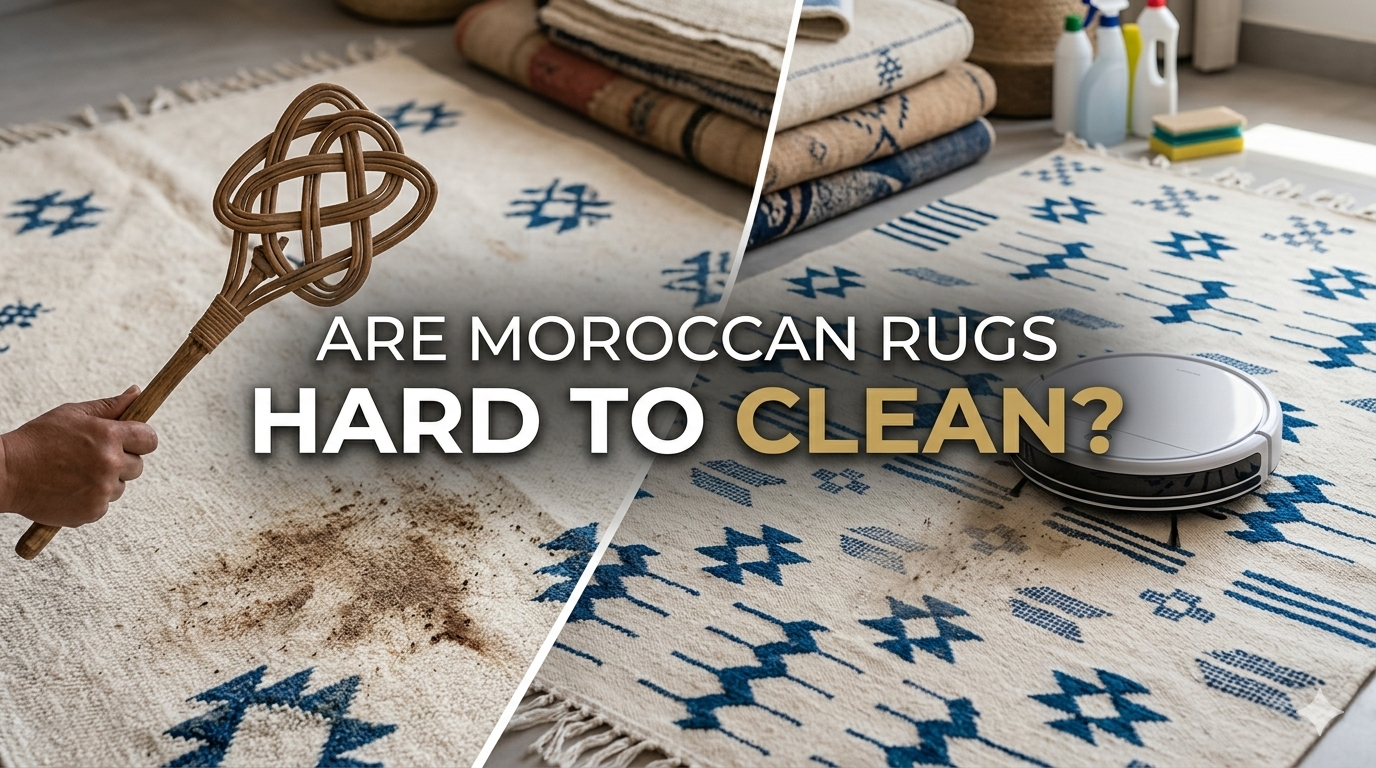
Many homeowners in Belgium admire the timeless beauty of Moroccan Rugs. These hand-woven treasures add warmth and character to any living space. However, a common concern often prevents people from purchasing them: the fear of difficult maintenance.
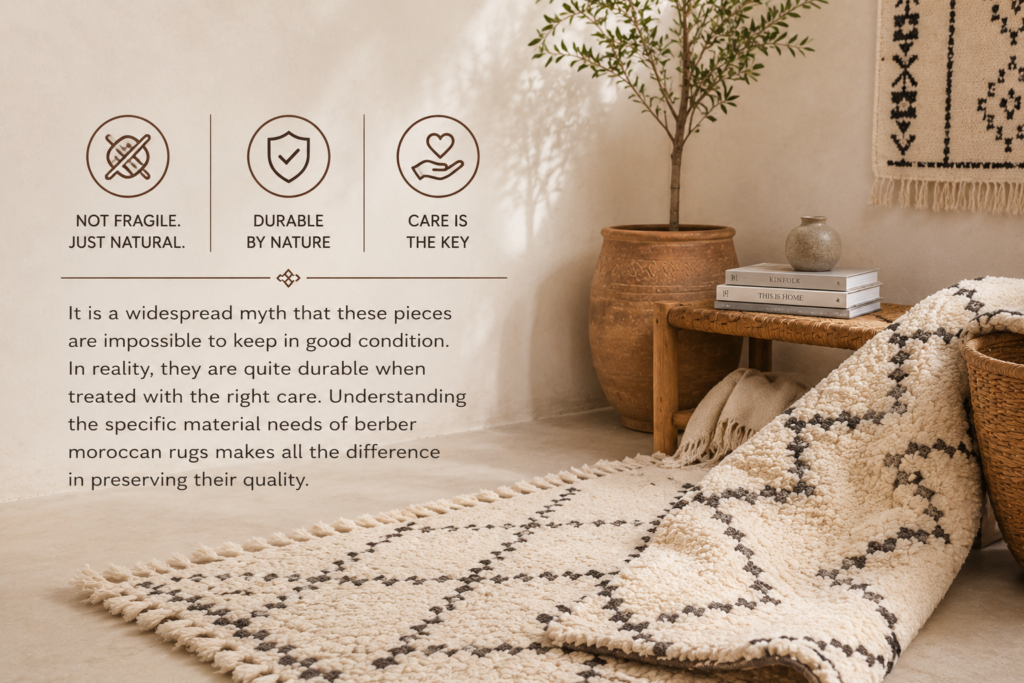
By learning simple cleaning techniques, owners can enjoy these items for years. Proper upkeep ensures that Moroccan Rugs remain a stunning focal point in the home. With the correct approach, maintaining berber moroccan rugs becomes a manageable task rather than a chore.
Key Takeaways
- These floor coverings are highly durable and well-suited for modern homes.
- Routine maintenance is simpler than most people initially assume.
- Understanding material requirements is the secret to long-lasting beauty.
- Proper care prevents damage and keeps the fibers looking fresh.
- Investing in these pieces adds lasting value to your interior decor.
Understanding the Maintenance of Moroccan Rugs
Authentic Moroccan rugs possess distinct characteristics that dictate how they should be cleaned and preserved. By recognizing the specific materials and techniques used in their creation, owners can ensure these pieces remain vibrant for years. Proper care begins with a clear understanding of what makes these textiles so unique.
The Nature of Berber Wool Rugs
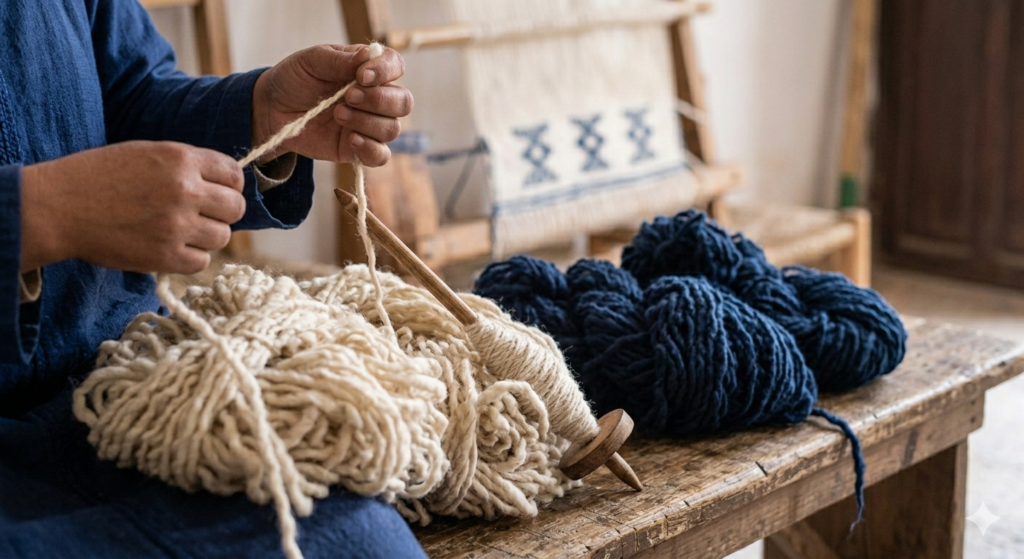
The foundation of many traditional pieces lies in the quality of the fiber. High-quality berber wool rugs are prized for their natural lanolin content, which provides a soft texture and inherent resistance to dirt. This natural oil acts as a protective barrier, making the fibers more durable than many modern alternatives.
Because these fibers are organic, they react differently to cleaning agents than synthetic materials. Gentle handling is essential to preserve the integrity of the wool. Harsh chemicals can strip away the natural oils, leading to brittle fibers and a loss of the rug’s signature luster.
Why Handmade Moroccan Rugs Require Special Care
Unlike mass-produced synthetic floor coverings, handmade moroccan rugs are crafted using time-honored techniques passed down through generations. Each knot reflects the skill of the artisan, creating a structure that is both dense and flexible. This craftsmanship demands a more thoughtful approach to maintenance compared to factory-made items.
Owners should avoid aggressive scrubbing or high-heat steam cleaning, which can damage the delicate weave. Instead, a consistent, light cleaning routine helps maintain the rug’s structural health. Treating these items with respect ensures that the handmade moroccan rugs continue to serve as functional art in the home.
Common Misconceptions About Vintage Moroccan Rugs
Many people assume that vintage moroccan rugs are inherently fragile due to their age. In reality, these pieces were often built to withstand decades of daily use in harsh environments. Age does not necessarily equate to weakness if the rug has been stored or maintained correctly.
The true condition of vintage moroccan rugs depends more on previous care than on the number of years they have existed. When handled with the right techniques, these older textiles can be just as resilient as newer ones. Understanding this distinction allows owners to enjoy the history and character of their pieces without unnecessary fear of damage.
Practical Cleaning Methods for Moroccan Rugs
Caring for authentic textiles involves simple habits that protect their unique texture. By following a structured approach, owners can ensure their Moroccan Rugs remain vibrant and durable for many years.
Routine Maintenance and Vacuuming Techniques
Best Practices for Daily Care
Regular maintenance is the most effective way to prevent dirt from settling deep into the pile. Owners should aim to shake out their handmade moroccan rugs outdoors at least once a month to dislodge loose dust and debris.
- Rotate the rug every few months to ensure even wear.
- Use a rug pad to prevent slipping and reduce friction against the floor.
- Keep the rug away from direct, harsh sunlight to prevent color fading.
Avoiding Damage to Delicate Fibers
When vacuuming berber wool rugs, it is vital to use the right equipment to avoid fraying the delicate knots. Always disable the beater bar or rotating brush, as these can pull at the fibers and cause long-term damage.
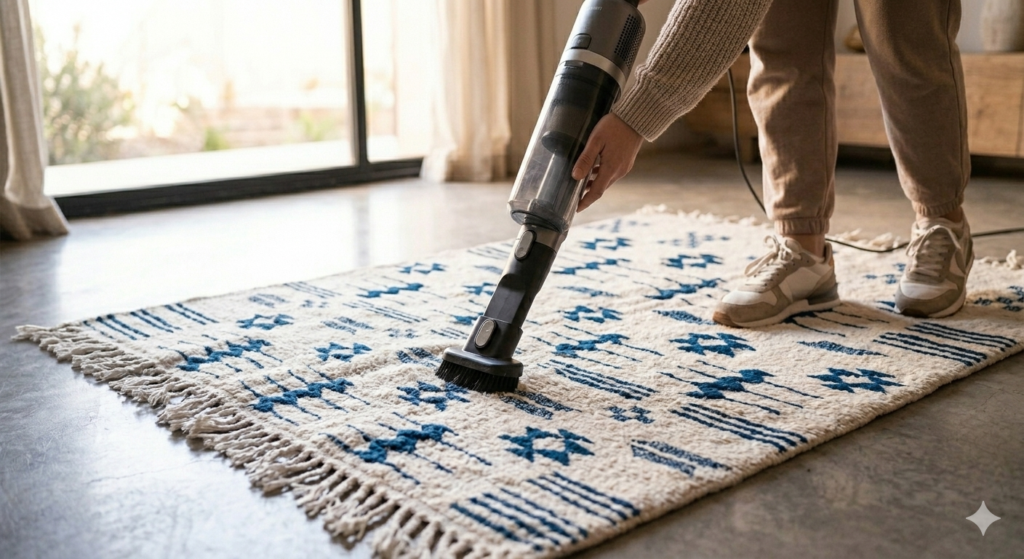
Instead, use a suction-only attachment to gently clean the surface. This method preserves the natural lanolin in the wool, which helps the rug resist stains naturally.
Addressing Spills and Stains Promptly
Natural Solutions for Spot Cleaning
Accidents happen, but acting quickly is the key to preventing permanent marks. For most spills on berber moroccan rugs, a simple mixture of water and a mild, pH-neutral soap works wonders.
| Stain Type | Action | Tool |
| Liquid Spills | Blot immediately | White cloth |
| Dry Debris | Gently scrape | Butter knife |
| Deep Stains | Mild soap mix | Soft sponge |
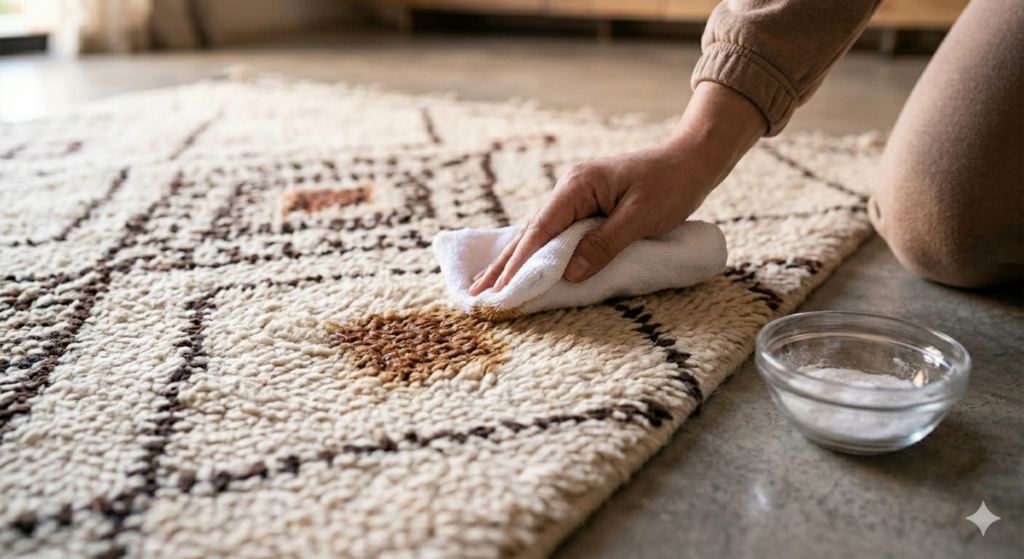
Always blot the area rather than rubbing it, as rubbing can push the liquid deeper into the fibers. This gentle touch is essential for maintaining the quality of handmade moroccan rugs.
When to Seek Professional Cleaning Services in Belgium
While daily care is manageable at home, some situations require expert intervention. If you notice deep-set odors, significant color bleeding, or heavy soil accumulation, it is time to contact a professional cleaner in Belgium.
Professional cleaning is recommended every two to three years to deep-clean the foundation and restore the natural luster of the wool.
— Textile Preservation Experts
Choosing a specialist familiar with Moroccan Rugs ensures that the cleaning process respects the traditional weaving techniques used in these pieces. Professional services provide the deep extraction needed to keep your investment in pristine condition.
Final Thoughts
Owning a piece of history does not mean you must sacrifice your free time to cleaning. Moroccan Rugs serve as durable foundations for any living space when owners approach their care with patience and consistency.
The unique character of vintage moroccan rugs often improves with age. Regular attention transforms a simple cleaning task into a rewarding ritual that honors the craftsmanship behind every knot. Owners who embrace these small habits protect the cultural value of their investment for years to come.
Confidence in managing these textiles allows homeowners to enjoy the comfort and warmth they provide. Proper care ensures that Moroccan Rugs remain vibrant focal points in a modern Belgian home. Treating vintage moroccan rugs as living parts of a household creates a lasting bond between the owner and the art. Start this simple routine today to keep your space feeling authentic and inviting.
FAQ
Are Moroccan rugs significantly harder to maintain than standard synthetic rugs?
Not necessarily. While handmade moroccan rugs require a specific approach due to their natural fibers, they are designed for durability. The misconception that they are impossible to clean often stems from a lack of understanding regarding their materials. With the right techniques, such as avoiding harsh chemicals and using gentle suction, these pieces remain a manageable and stunning addition to any home.
What makes the material of berber wool rugs naturally resistant to dirt?
Authentic berber wool rugs are rich in natural lanolin, a waxy substance found in sheep’s wool. This lanolin acts as a protective barrier that prevents spills and dust from immediately penetrating deep into the fibers. This organic quality makes high-quality berber moroccan rugs surprisingly resilient compared to mass-produced synthetic alternatives that lack such natural defenses.
Can I use a standard vacuum cleaner on my vintage moroccan rugs?
It is important to exercise caution. When cleaning vintage moroccan rugs, one should avoid using a vacuum with a beater bar or rotating brush, as these can snag and pull the delicate, hand-knotted fibers. Instead, use a suction-only attachment or a low-power setting to remove surface dust without compromising the structural integrity of the weave.
How should I handle an accidental spill on handmade moroccan rugs?
Immediate action is key. For handmade moroccan rugs, owners should blot the spill with a clean, dry cloth to absorb as much liquid as possible—never scrub, as this pushes the liquid deeper into the berber wool rugs. Using natural, pH-neutral solutions or simply lukewarm water is often sufficient for spot cleaning without damaging the organic dyes.
Does the age of vintage moroccan rugs make them too fragile for high-traffic areas?
Age does not always equate to fragility. Many vintage moroccan rugs have survived decades of use in the Atlas Mountains, proving their exceptional craftsmanship. While they should be treated with respect, their dense construction often makes them suitable for various living spaces, provided they receive regular, low-impact maintenance.
When should a homeowner in Belgium contact a professional for rug cleaning?
If a rug has deep-seated odors, extensive staining, or hasn’t been deep-cleaned in several years, it is time to seek professional expertise. In regions like Brussels or Antwerp, owners of berber moroccan rugs should look for specialists like Tapis Net or dedicated textile conservators who understand how to treat natural dyes and wool fibers without using industrial steam cleaners that could shrink the rug.
Is it true that shaking out a rug is better than vacuuming it?
For handmade moroccan rugs, traditional methods are often the most effective. Taking the rug outside and shaking it or gently beating it helps release trapped dust and allergens from the base of the pile that a vacuum might miss. This practice, combined with occasional sun exposure to naturally deodorize the berber wool rugs, helps maintain their freshness for generations.