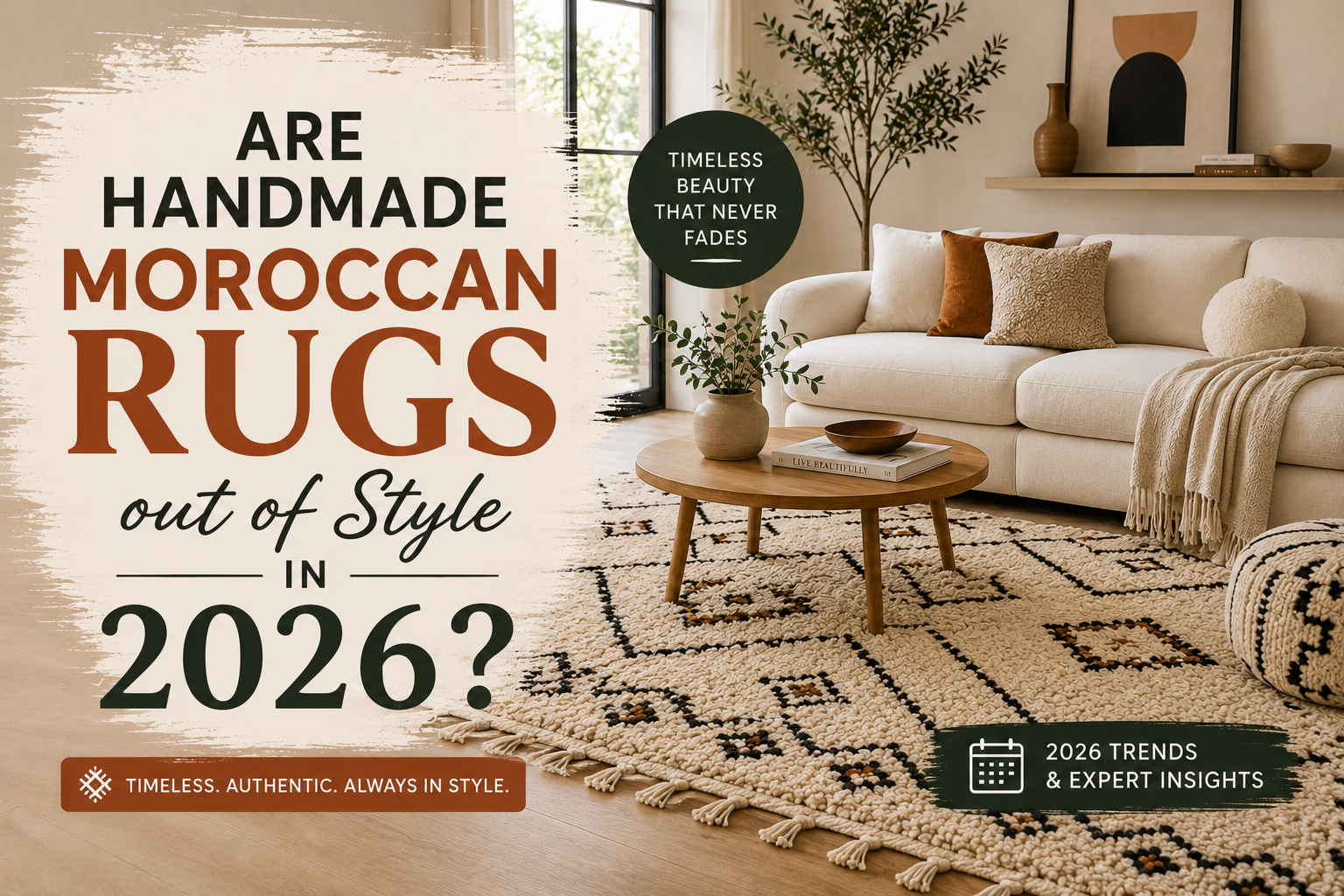
Interior design trends come and go, but some pieces never lose their appeal. If you’re wondering “Are handmade Moroccan rugs out of style in 2026?”, the short answer is no. In fact, authentic handmade Moroccan rugs remain one of the most sought-after home décor investments for designers and homeowners alike.
While interior styles continue to evolve, Moroccan rugs have proven their ability to adapt to changing trends. From Organic Modern and Japandi to Minimalist, Coastal, Mid-Century Modern, and Boho interiors, these handcrafted rugs continue to add warmth, texture, and timeless character to homes around the world.
In this guide, we’ll explore why Moroccan rugs are more relevant than ever in 2026, the latest decorating trends, and how to choose a rug that will never go out of style.
The Short Answer: No, Moroccan Rugs Are Not Out of Style
If anything, handmade Moroccan rugs have become even more desirable in 2026.
Today’s homeowners are moving away from mass-produced décor and investing in pieces that offer:
- Authentic craftsmanship
- Sustainable materials
- Timeless design
- Long-lasting quality
- Unique character
A handmade Moroccan rug checks every one of those boxes.
Rather than following short-lived trends, these rugs have become design staples that continue to evolve with modern interiors.
Why Moroccan Rugs Remain Popular in 2026
Several interior design movements have contributed to the continued popularity of Moroccan rugs.
Homeowners increasingly value:
- Natural materials
- Artisan-made products
- Comfortable living spaces
- Sustainable purchasing
- Warm minimalist interiors
Moroccan rugs naturally align with these priorities, making them one of the most versatile flooring choices available.
2026 Interior Design Trends That Pair Perfectly with Moroccan Rugs
One reason Moroccan rugs remain so popular is their ability to complement today’s leading design styles.
Organic Modern
Organic Modern continues to dominate contemporary interiors.
This style combines:
- Natural wood
- Stone textures
- Neutral palettes
- Curved furniture
- Sustainable materials
A plush Beni Ourain rug or luxurious Mrirt rug adds warmth while preserving the clean, modern aesthetic.
Japandi
Japandi remains one of the strongest design influences in 2026.
Its emphasis on:
- Simplicity
- Functionality
- Natural textures
- Calm interiors
makes handmade Moroccan rugs an ideal finishing touch.
Minimalist Homes
Modern minimalism has become warmer and more inviting.
Rather than empty spaces, today’s minimalist homes feature:
- Layered textures
- Soft natural materials
- Carefully selected statement pieces
A Moroccan rug provides warmth without adding visual clutter.
Coastal Interiors
Modern coastal homes now emphasize:
- Natural fibers
- Neutral colors
- Organic textures
- Relaxed elegance
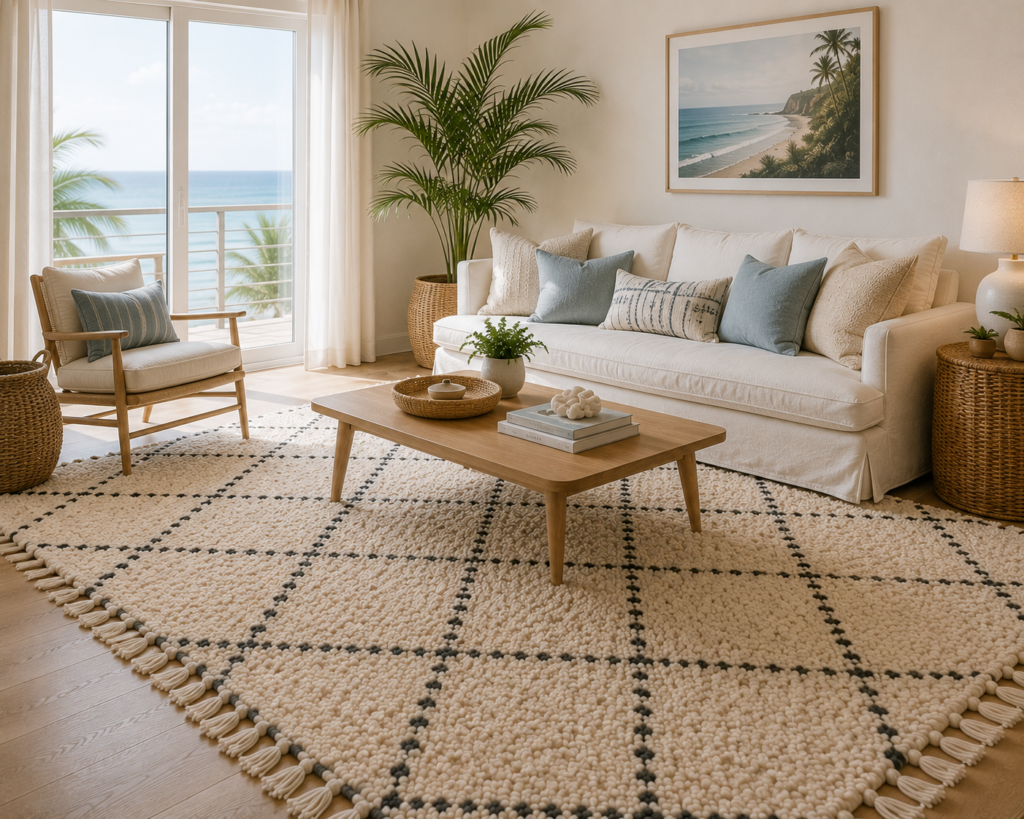
Moroccan rugs complement these spaces beautifully while offering more comfort than traditional natural fiber rugs.
Boho Interiors
Bohemian design continues to embrace handcrafted textiles from around the world.
Colorful Azilal rugs, vintage Boujaad rugs, and intricate Taznakht rugs remain favorites for adding personality and artistic expression.
Mid-Century Modern
The timeless appeal of Mid-Century Modern furniture pairs naturally with Moroccan rugs.
The combination of:
- Warm wood furniture
- Clean architectural lines
- Handmade wool textures
creates interiors that feel sophisticated and inviting.
Why Homeowners Prefer Handmade Rugs Over Mass-Produced Rugs
In 2026, many people are choosing quality over quantity.
Handmade Moroccan rugs offer advantages that machine-made rugs simply cannot match.
These include:
- Individual craftsmanship
- Natural wool
- Unique patterns
- Exceptional durability
- Timeless beauty
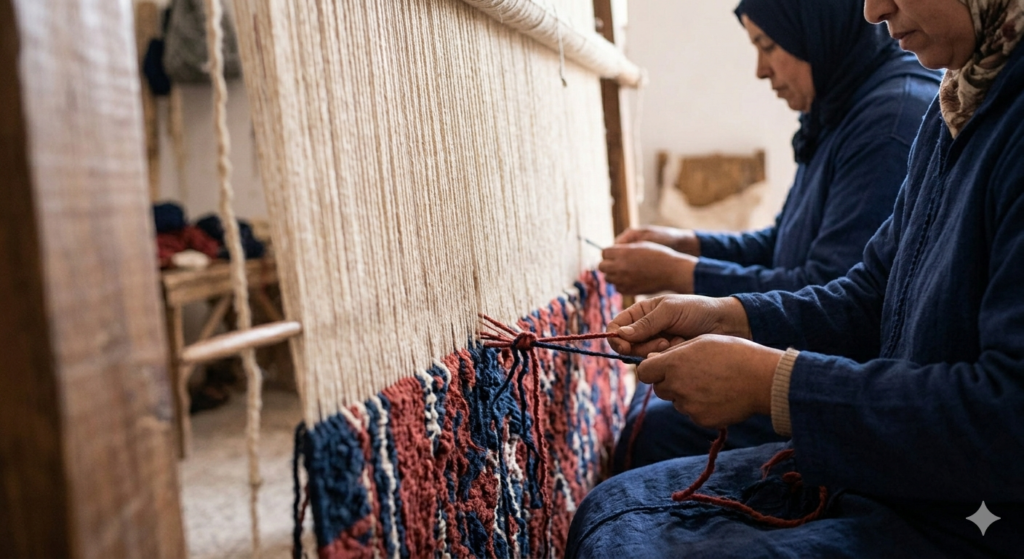
Every handmade rug reflects the skill and creativity of the artisan who created it.
Sustainability Matters More Than Ever
Sustainability has become a major factor when furnishing modern homes.
Authentic Moroccan rugs support environmentally conscious living through:
- Renewable natural wool
- Traditional hand-weaving techniques
- Long product lifespan
- Reduced dependence on mass manufacturing
Investing in one high-quality handmade rug often replaces the need to buy multiple lower-quality rugs over time.
Which Moroccan Rug Styles Are Trending in 2026?
Several styles continue to stand out.
Beni Ourain Rugs
Still one of the world’s most popular Moroccan rugs thanks to:
- Ivory backgrounds
- Black diamond patterns
- Thick wool pile
- Timeless simplicity
Perfect for modern and minimalist interiors.
Mrirt Rugs
Increasingly popular for luxury homes because of their:
- Dense premium wool
- Soft texture
- Elegant contemporary designs
Azilal Rugs
Loved for their:
- Artistic patterns
- Colorful designs
- Playful personality
Ideal for creative interiors.
Boujaad Rugs
Vintage-inspired Boujaad rugs remain highly sought after for their:
- Warm earthy colors
- Faded charm
- One-of-a-kind character
Taznakht Rugs
Known for:
- Rich colors
- Intricate geometric motifs
- Traditional craftsmanship
Perfect for statement interiors.
Kilim Rugs
Flatwoven Kilim rugs continue to grow in popularity because they’re:
- Lightweight
- Durable
- Easy to maintain
- Highly versatile
Ideal for dining rooms, hallways, kitchens, and entryways.
What Colors Are Trending in 2026?
Neutral palettes continue to dominate, especially in modern interiors.
Popular rug colors include:
- Ivory
- Cream
- Beige
- Taupe
- Sand
- Warm gray
At the same time, earthy accent colors are making a strong comeback.
Trending shades include:
- Terracotta
- Olive green
- Rust
- Clay
- Dusty blue
- Soft mustard
These colors bring warmth without overpowering a room.
Will Moroccan Rugs Still Be Stylish in Five or Ten Years?
Absolutely.
Unlike trend-driven décor, Moroccan rugs have remained popular for generations.
Their enduring appeal comes from:
- Authentic craftsmanship
- High-quality natural materials
- Versatile designs
- Cultural heritage
- Timeless aesthetics
Because they adapt to changing design styles, they continue to look relevant year after year.
Why Handmade Rugs Are an Investment
A handmade Moroccan rug is more than a decorative accessory.
It’s an investment in:
- Artisan craftsmanship
- Lasting durability
- Sustainable living
- Timeless style
With proper care, an authentic wool Moroccan rug can be enjoyed for decades and may even become a treasured family heirloom.
Why Choose Women Rugs?
At Women Rugs, we believe timeless craftsmanship never goes out of style.
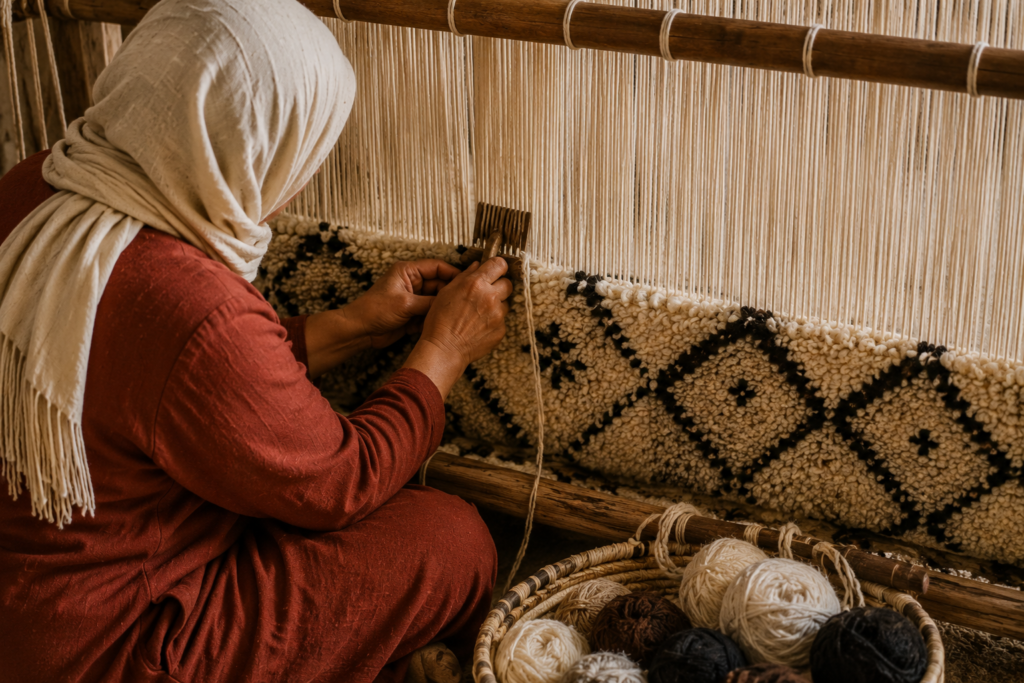
Our collection features authentic handmade Beni Ourain rugs, luxurious Mrirt rugs, colorful Azilal rugs, vintage Boujaad rugs, elegant Taznakht rugs, and versatile Kilim rugs, all handcrafted by skilled Amazigh artisans using premium natural wool and traditional weaving techniques.
Every rug is carefully selected for its authenticity, quality, and lasting beauty, making it easy to find a piece that complements both today’s interiors and tomorrow’s trends.
Final Thoughts
So, are handmade Moroccan rugs out of style in 2026? Definitely not.
In fact, they’re more relevant than ever. As homeowners continue to embrace sustainable living, natural materials, and timeless craftsmanship, authentic Moroccan rugs remain one of the smartest design investments you can make.
Whether you’re decorating an Organic Modern, Japandi, Minimalist, Boho, Coastal, or Mid-Century Modern home, a handmade Moroccan rug brings warmth, texture, and character that never goes out of fashion.
Instead of chasing short-lived trends, choose a rug that has already stood the test of time—and will continue to enhance your home for years to come.
Frequently Asked Questions
Are Moroccan rugs still trendy in 2026?
Yes. Handmade Moroccan rugs continue to be one of the most popular choices for modern interiors thanks to their timeless designs, natural wool, and artisan craftsmanship.
Which Moroccan rug style is most popular in 2026?
Beni Ourain rugs remain the top choice for modern homes, while Mrirt, Azilal, Boujaad, Taznakht, and Kilim rugs are also highly sought after for different interior styles.
Why are handmade Moroccan rugs considered timeless?
Their handcrafted quality, premium natural materials, cultural heritage, and versatile designs allow them to complement changing interior trends year after year.
Are handmade Moroccan rugs worth buying in 2026?
Absolutely. They offer exceptional durability, sustainable craftsmanship, and timeless style, making them a long-term investment rather than a temporary décor trend.
What interior styles work best with Moroccan rugs?
Moroccan rugs pair beautifully with Organic Modern, Japandi, Minimalist, Boho, Coastal, Mid-Century Modern, and contemporary interiors, making them one of the most versatile rug styles available.