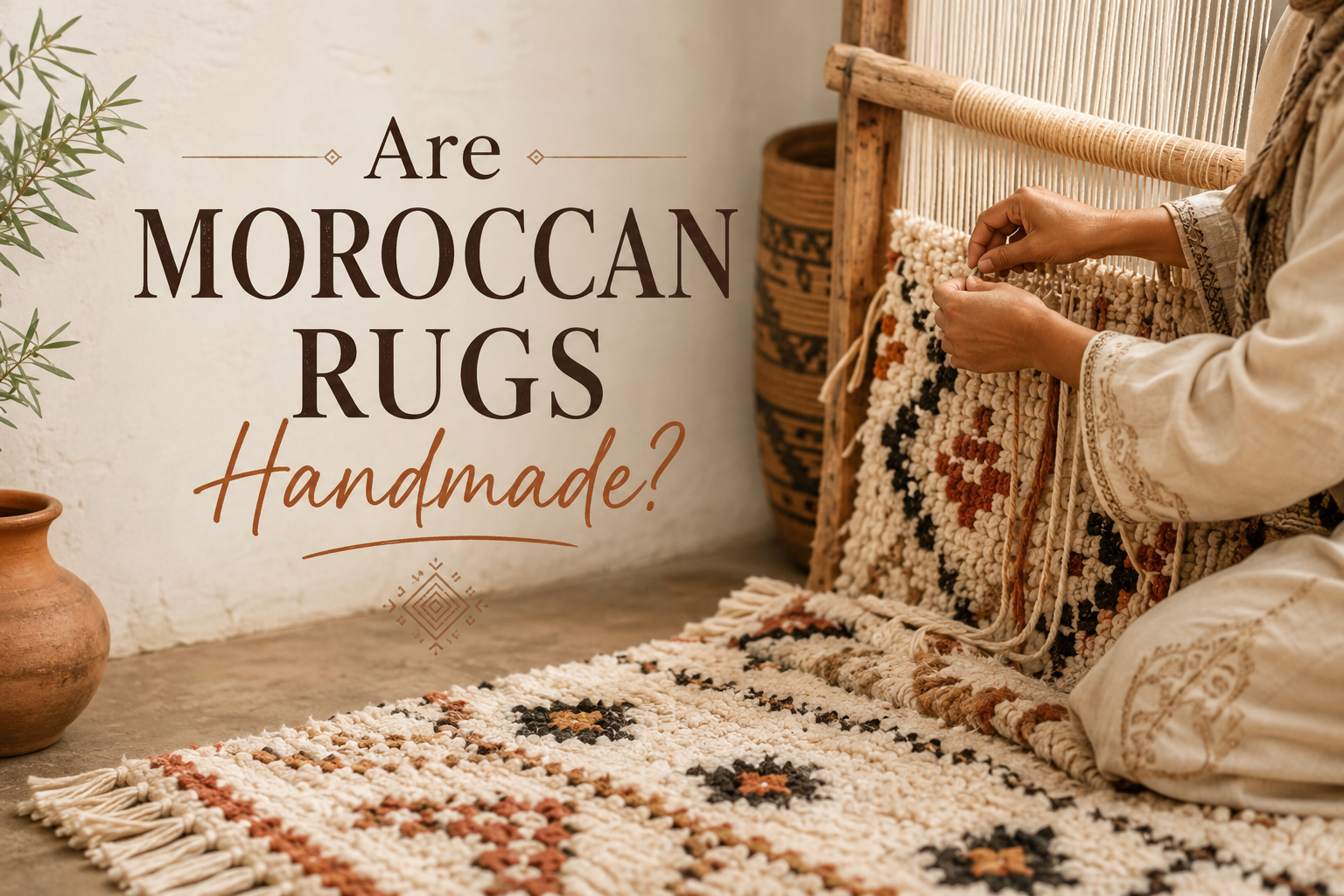
If you’re shopping for a Moroccan rug, you’ve likely come across the term “handmade Moroccan rug.” But are all Moroccan rugs actually handmade, or is it just a marketing phrase?
The answer is that authentic Moroccan rugs are traditionally handmade by skilled artisans, using techniques that have been passed down through generations. However, due to the growing popularity of Moroccan-style décor, many machine-made rugs now imitate traditional Moroccan designs, making it important to understand the difference.
In this guide, we’ll explain how handmade authentic Moroccan rugs are made, what sets them apart from machine-made alternatives, and how to identify a genuine Moroccan rug when shopping.
Yes, Authentic Moroccan Rugs Are Handmade
Traditional Moroccan rugs are handcrafted by artisans, many of whom belong to Berber communities throughout Morocco. These weaving traditions have existed for centuries and continue to play an important role in Moroccan culture today.
Unlike factory-produced rugs, handmade Moroccan rugs are created using manual weaving techniques that require skill, patience, and attention to detail.
Every rug is woven individually, which means no two pieces are exactly alike.
This handmade process is one of the reasons authentic Moroccan rugs are highly valued around the world.
How Handmade Moroccan Rugs Are Made
The creation of a handmade Moroccan rug involves several labor-intensive steps.
1. Wool Preparation
Most authentic Moroccan rugs begin with natural wool sourced from sheep raised in Morocco’s Atlas Mountains.
The wool is cleaned, sorted, and prepared before weaving begins.
2. Spinning the Yarn
Artisans spin the wool into yarn, often using traditional methods that have been practiced for generations.
This process helps create the unique texture that handmade Moroccan rugs are known for.
3. Dyeing the Wool
Depending on the design, the yarn may be dyed using natural pigments derived from plants, flowers, minerals, and other organic materials.
Some rugs feature vibrant colors, while others showcase the natural shades of wool.
4. Hand-Weaving
The artisan weaves the rug on a loom, knotting or weaving each section by hand.
This stage can take weeks or even months, depending on the size and complexity of the rug.
5. Finishing and Washing
After weaving is complete, the rug is trimmed, washed, and inspected to ensure quality and durability.
The result is a unique handcrafted piece that reflects both artistry and tradition.
Why Handmade Moroccan Rugs Are Special
There are several reasons handmade Moroccan rugs continue to be sought after by homeowners and interior designers worldwide.
Every Rug Is Unique
Since each rug is woven by hand, no two rugs are exactly alike.
Slight variations in pattern, texture, and color are natural and add to the rug’s authenticity and character.
Traditional Craftsmanship
Many Moroccan artisans learn weaving techniques from family members, preserving skills that have been passed down for generations.
Each rug reflects a rich cultural heritage that cannot be replicated through mass production.
Exceptional Quality
Handmade Moroccan rugs are often crafted from premium natural wool, making them durable, comfortable, and long-lasting.
Many can remain in excellent condition for decades with proper care.
Meaningful Designs
Traditional Moroccan rugs often feature symbols and motifs that represent family, nature, protection, fertility, and everyday life.
These elements give each rug cultural and artistic significance beyond its decorative appeal.
Are All Moroccan Rugs Handmade?
No.
While authentic Moroccan rugs are handmade, many retailers now sell machine-made rugs inspired by traditional Moroccan designs.
These rugs may resemble handmade Moroccan rugs visually, but they are produced using industrial machinery rather than artisan craftsmanship.
Machine-made rugs are often:
- Less expensive
- Made from synthetic materials
- Produced in large quantities
- Uniform in appearance
Although they can be attractive, they generally lack the quality, uniqueness, and cultural value of genuine handmade Moroccan rugs.
How to Tell If a Moroccan Rug Is Handmade
If you’re looking for an authentic handmade Moroccan rug, here are several signs to look for.
Slight Imperfections
Handmade rugs often contain small variations in pattern or symmetry.
These imperfections are a sign that the rug was woven by hand rather than produced by a machine.
Natural Wool Fibers
Authentic Moroccan rugs are typically made from natural wool, which feels soft, durable, and slightly textured.
Handmade Fringe
In many handmade rugs, the fringe is part of the rug’s foundation rather than being sewn on separately.
Visible Knotting and Weaving
Examining the back of the rug can reveal signs of hand-knotting or hand-weaving.
Machine-made rugs usually have perfectly uniform stitching and patterns.
Unique Character
Because handmade rugs are created individually, each piece has its own personality and distinctive features.
Why Handmade Moroccan Rugs Cost More
One of the most common questions buyers ask is why handmade Moroccan rugs are more expensive than machine-made alternatives.
The answer lies in the amount of work involved.
Creating a handmade Moroccan rug requires:
- Skilled craftsmanship
- Premium natural materials
- Weeks or months of labor
- Traditional weaving techniques
- Careful finishing and quality control
The higher price reflects the time, expertise, and artistry invested in every rug.
Many buyers view this cost as a worthwhile investment because of the rug’s durability and long-term value.
The Benefits of Choosing a Handmade Moroccan Rug
Investing in a handmade Moroccan rug offers several advantages.
Durability
Handmade rugs are often stronger and longer-lasting than machine-made alternatives.
Timeless Design
Moroccan rugs complement a wide variety of interior styles and remain fashionable year after year.
Sustainability
Many handmade Moroccan rugs are crafted using natural materials and traditional production methods.
Authenticity
Each rug represents genuine artisan craftsmanship and cultural heritage.
One-of-a-Kind Beauty
No two handmade Moroccan rugs are exactly alike, making every piece unique.
Supporting Artisan Communities
When you purchase an authentic handmade Moroccan rug, you’re doing more than decorating your home.
You’re also supporting artisan communities that continue to preserve centuries-old weaving traditions.
This support helps:
- Sustain traditional craftsmanship
- Preserve cultural heritage
- Create economic opportunities for artisans and their families
For many buyers, this added value makes a handmade Moroccan rug even more meaningful.
Final Thoughts
So, are Moroccan rugs handmade?
Authentic Moroccan rugs are indeed handmade, crafted by skilled artisans using traditional techniques that have been passed down through generations. From preparing the wool to weaving intricate patterns by hand, every step reflects a commitment to quality, artistry, and cultural heritage.
While machine-made Moroccan-style rugs are widely available, they cannot replicate the uniqueness, craftsmanship, and authenticity of a genuine handmade Moroccan rug.
If you’re looking for a rug that combines beauty, durability, and tradition, a handmade Moroccan rug is an investment worth considering.
Frequently Asked Questions
Are all Moroccan rugs handmade?
No. Authentic Moroccan rugs are handmade, but many machine-made rugs are designed to imitate traditional Moroccan styles.
How can I tell if a Moroccan rug is handmade?
Look for natural wool, slight imperfections, handmade fringe, and visible hand-weaving on the back of the rug.
Why are handmade Moroccan rugs expensive?
Their price reflects the skilled labor, premium materials, and time-intensive weaving process required to create each rug.
How long does it take to make a handmade Moroccan rug?
Depending on the size and design, it can take anywhere from a few weeks to several months.
Are handmade Moroccan rugs worth it?
Yes. Many homeowners consider them a worthwhile investment because of their durability, craftsmanship, uniqueness, and timeless appeal.
Great content! Keep up the good work!