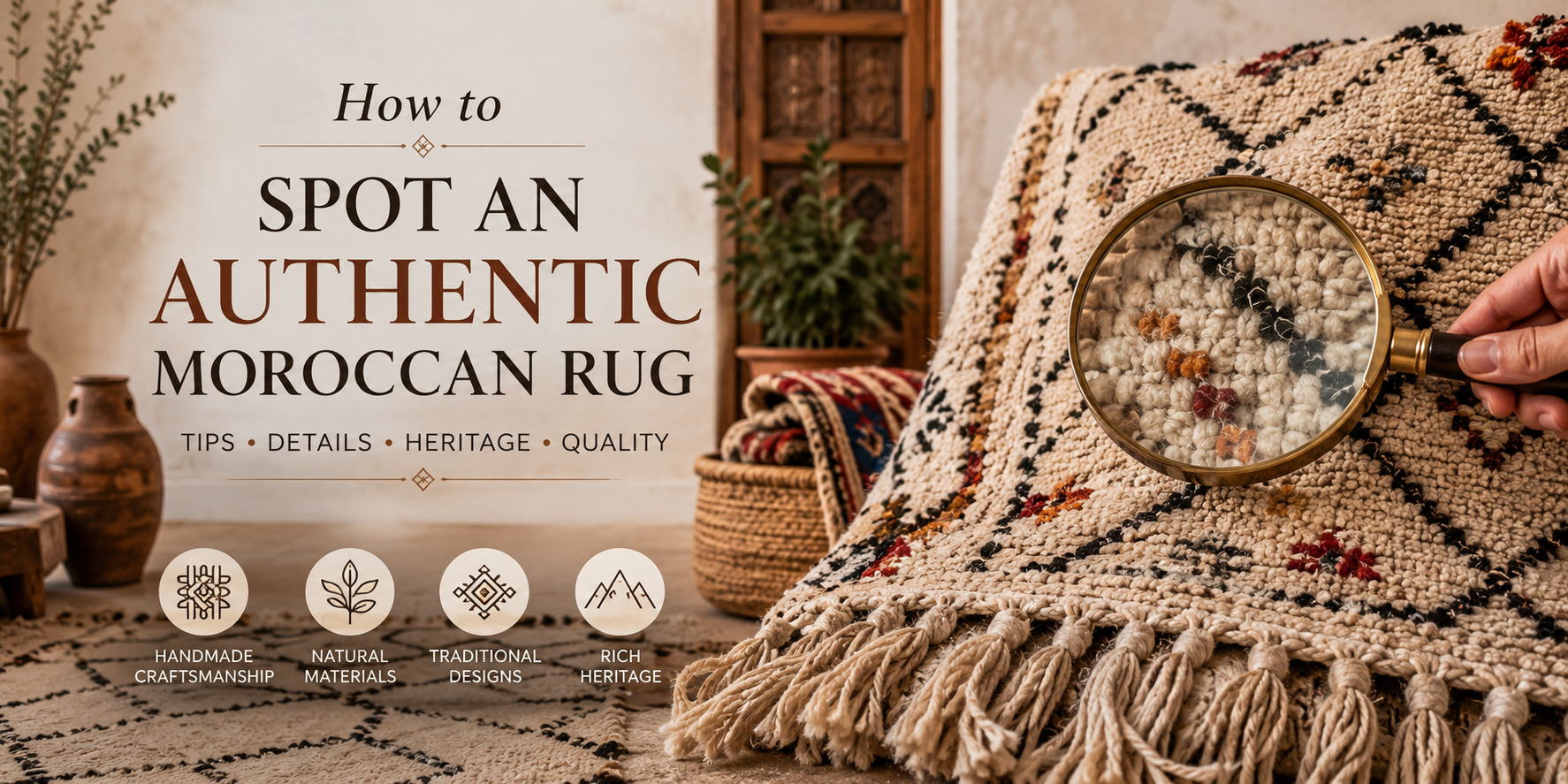
Moroccan rugs have become one of the most sought-after home décor pieces in the world. Their timeless beauty, handcrafted quality, and rich cultural heritage make them a favorite among homeowners, interior designers, and collectors alike.
However, as their popularity has grown, so has the number of machine-made imitations. Many rugs are marketed as “Moroccan style” even though they’re mass-produced using synthetic materials and factory techniques.
So, how can you tell if a Moroccan rug is authentic?
In this guide, we’ll walk you through the key signs of a genuine handmade Moroccan rug, helping you shop with confidence and invest in a rug that will last for generations.
Why Authenticity Matters
An authentic Moroccan rug is much more than a decorative accessory.
It’s a handcrafted work of art created by skilled Berber artisans using traditional weaving techniques that have been passed down through generations.
Choosing an authentic rug means you’re investing in:
- Superior craftsmanship
- Natural materials
- Long-lasting durability
- Cultural heritage
- One-of-a-kind artistry
Knowing what to look for can help you avoid low-quality imitations and ensure you’re getting real value.
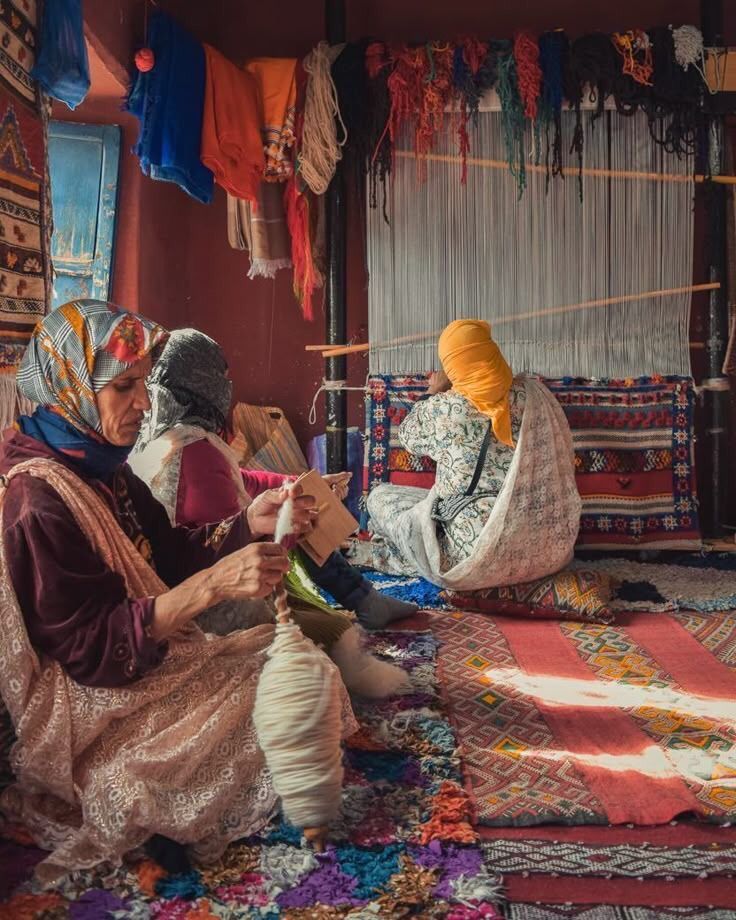
1. It’s Handmade, Not Machine-Made
The easiest way to identify an authentic Moroccan rug is by examining its construction.
Handmade rugs are woven individually by artisans rather than manufactured by machines.
Signs of handweaving include:
- Slight variations in pattern
- Minor asymmetry
- Irregular knot spacing
- Small imperfections
These natural differences are not flaws—they’re evidence of genuine craftsmanship.
Machine-made rugs, by contrast, usually have perfectly symmetrical designs and uniform stitching.
2. Look at the Back of the Rug
One of the best ways to check authenticity is to flip the rug over.
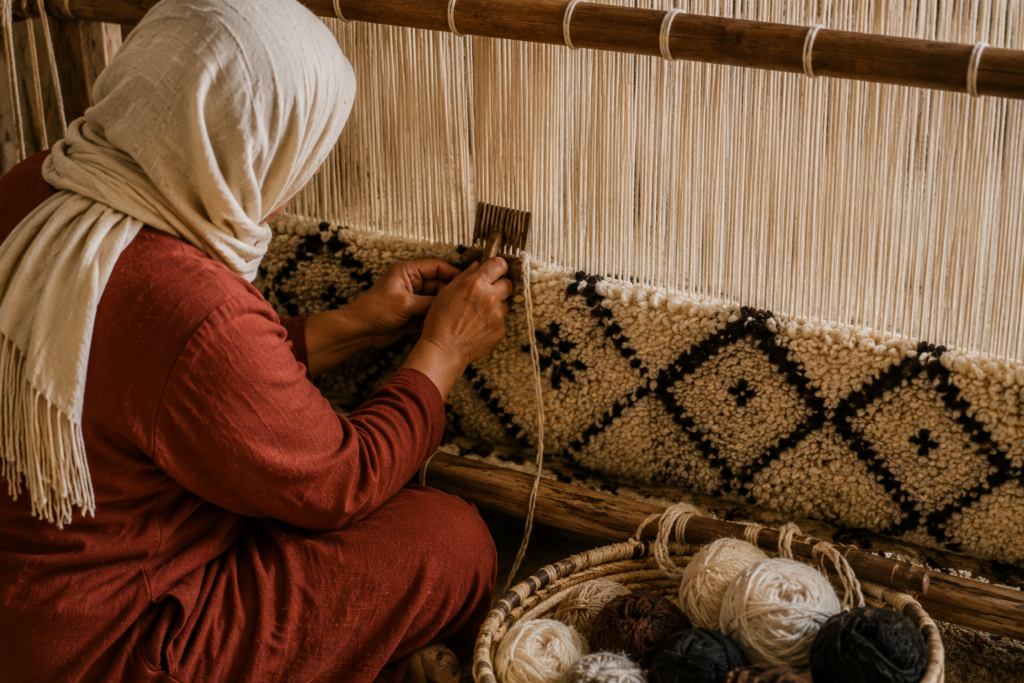
The back should clearly show the handwoven construction.
You’ll notice:
- Visible knots or woven structure
- Slight pattern variations
- Handmade consistency
Machine-made rugs often have a rigid backing, mesh, or perfectly identical stitching that looks almost printed.
A handmade rug tells its story from both sides.
3. Feel the Wool
Authentic Moroccan rugs are traditionally woven from 100% natural wool.
High-quality wool feels:
- Soft
- Dense
- Warm
- Slightly textured
Natural wool also has a distinctive feel that differs from synthetic fibers.
If the rug feels overly smooth, plastic-like, or shiny, it may contain synthetic materials.
Premium wool is one of the hallmarks of authentic handmade Moroccan rugs.
4. Check the Fringe
On genuine Moroccan rugs, the fringe is usually an extension of the rug’s foundation.
It is woven into the rug itself rather than sewn on afterward.
Machine-made rugs often have fringe that is stitched onto the edges after production.
A naturally integrated fringe is a strong indicator of authentic craftsmanship.
5. Expect Slight Imperfections
Many buyers mistakenly believe that a perfect rug is a better rug.
In reality, authentic handmade Moroccan rugs often contain small irregularities.
You may notice:
- Slightly uneven lines
- Minor size variations
- Differences in knot spacing
- Asymmetrical motifs
These characteristics reflect the artisan’s hand and make every rug unique.
No two handmade Moroccan rugs are ever exactly alike.
6. Look for Natural Colors
Traditional Moroccan rugs often feature colors created using natural dyes derived from:
- Plants
- Flowers
- Minerals
- Roots
- Herbs
Natural dyes produce rich, earthy tones that age beautifully over time.
Some rug styles, such as Beni Ourain rugs, often use the natural cream or ivory color of undyed wool.
Bright synthetic colors may indicate modern factory production rather than traditional craftsmanship.
7. Notice the Weight
Authentic wool Moroccan rugs often feel heavier than synthetic rugs of similar size.
The dense wool fibers and handcrafted construction contribute to their substantial feel.
Although weight varies by rug style, genuine handmade rugs typically have a solid, high-quality presence.
8. Every Rug Should Be Unique
One of the defining features of handmade Moroccan rugs is individuality.
Because artisans weave each rug by hand, every piece contains unique characteristics.
Patterns may vary slightly.
Color tones may differ.
Measurements may not be perfectly exact.
This uniqueness is one of the greatest reasons collectors value authentic Moroccan rugs.
If several rugs look completely identical, they’re likely machine-made.
9. Understand the Different Moroccan Rug Styles
Authenticity also comes from understanding traditional Moroccan rug types.
Some of the most popular include:
Beni Ourain Rugs
- Thick wool pile
- Cream background
- Black geometric patterns
Perfect for modern and minimalist interiors.
Azilal Rugs
- Colorful abstract designs
- Artistic Berber symbols
- Lighter construction
Ideal for bohemian and eclectic spaces.
Boujaad Rugs
- Warm earthy tones
- Vintage appearance
- Rich tribal patterns
Perfect for cozy, rustic interiors.
Kilim Rugs
- Flatwoven construction
- Lightweight
- Bold geometric designs
Excellent for dining rooms, hallways, and entryways.
Understanding these styles helps you recognize authentic Moroccan craftsmanship.
10. Buy from a Trusted Seller
Perhaps the most important step is purchasing from a reputable retailer that specializes in authentic handmade Moroccan rugs.
A trustworthy seller should provide information about:
- Materials
- Handmade construction
- Origin
- Weaving techniques
- Care instructions
Look for businesses that value transparency and work directly with Moroccan artisans whenever possible.
This not only helps ensure authenticity but also supports traditional craftsmanship and artisan communities.
Common Myths About Moroccan Rugs
Myth 1: Perfect Rugs Are Better
False.
Slight imperfections are often signs of genuine handmade craftsmanship.
Myth 2: All Moroccan Rugs Are White
False.
While Beni Ourain rugs are known for their neutral colors, Moroccan rugs also include vibrant styles like Azilal and warm-toned Boujaad rugs.
Myth 3: Handmade Rugs Shouldn’t Shed
False.
New handmade wool rugs naturally shed loose fibers during the first few months.
This is completely normal and usually decreases over time.
Why Authentic Moroccan Rugs Are Worth the Investment
Authentic handmade Moroccan rugs offer benefits that machine-made alternatives simply cannot match.
These include:
- Exceptional durability
- Premium natural wool
- Handmade artistry
- Timeless style
- Cultural significance
- One-of-a-kind beauty
With proper care, a genuine Moroccan rug can remain a treasured part of your home for decades.
Final Thoughts
Learning how to spot an authentic Moroccan rug helps you make a confident and informed purchase.
Look for signs of handweaving, natural wool, integrated fringe, slight imperfections, and unique craftsmanship. Understanding traditional rug styles like Beni Ourain, Azilal, Boujaad, and Kilim also makes it easier to recognize authentic Moroccan artistry.
Most importantly, buy from a trusted retailer that values quality and works with skilled artisans.
An authentic handmade Moroccan rug isn’t just a beautiful addition to your home—it’s a lasting investment in craftsmanship, culture, and timeless design.
Frequently Asked Questions
How can I tell if a Moroccan rug is authentic?
Look for handmade construction, natural wool, integrated fringe, slight irregularities, visible knots on the back, and unique patterns that differ from rug to rug.
Are all Moroccan rugs handmade?
Authentic Moroccan rugs are handmade, but many machine-made rugs imitate Moroccan designs. Always check the materials and construction before buying.
Do authentic Moroccan rugs have imperfections?
Yes. Small variations in pattern, size, and knotting are natural signs of handcrafted quality.
What material are authentic Moroccan rugs made from?
Most genuine Moroccan rugs are made from high-quality natural wool, although some flatwoven styles may also include cotton.
Why are authentic Moroccan rugs more expensive?
Their price reflects the premium materials, traditional weaving techniques, skilled craftsmanship, and the weeks or months required to create each rug by hand.