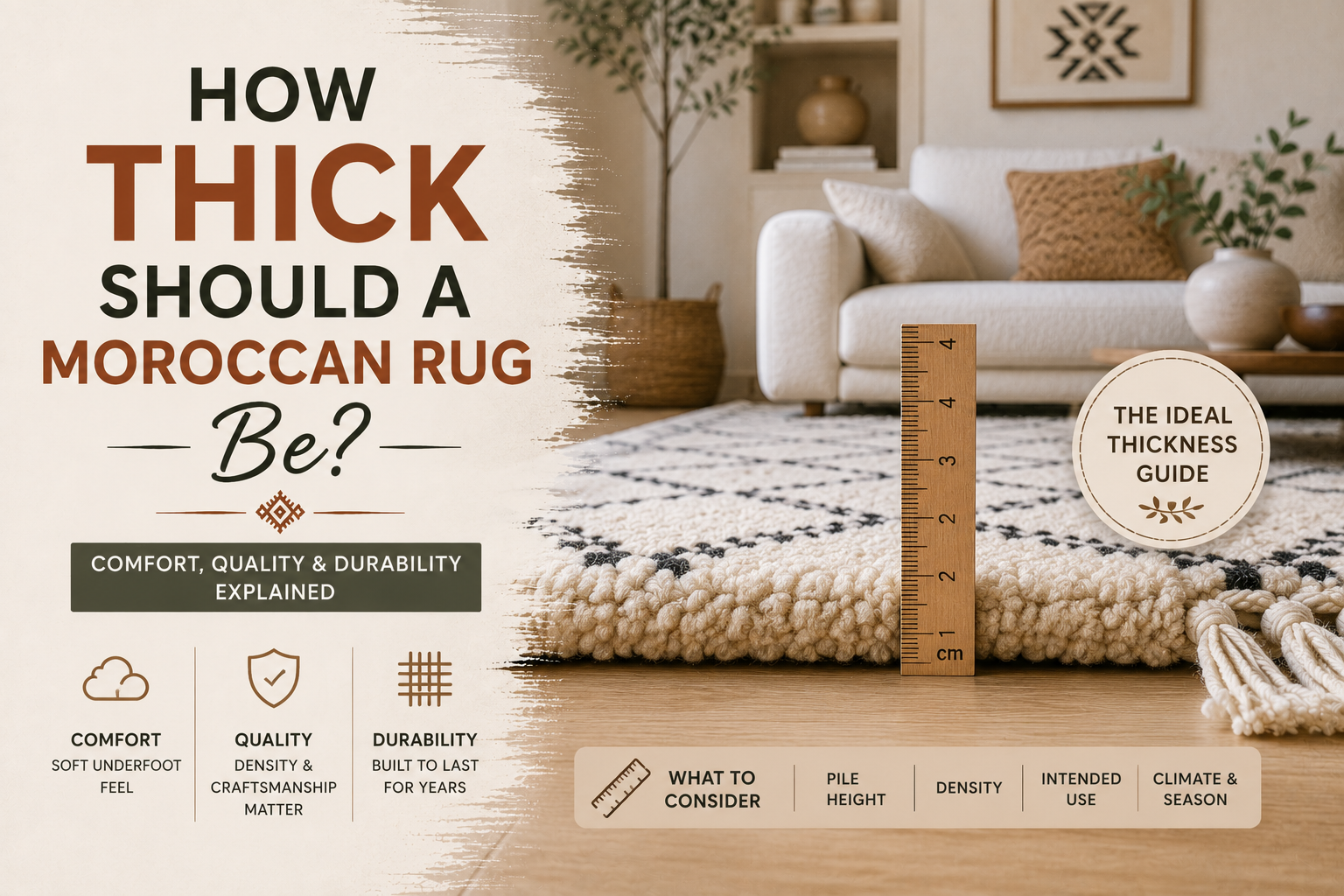
When shopping for a handmade Moroccan rug, one question often comes up: How thick should a Moroccan rug be? While color, size, and pattern are important, the rug’s thickness—or pile height—plays a major role in comfort, durability, maintenance, and how well it suits your space.
The ideal thickness depends on where the rug will be used and the style you choose. Some Moroccan rugs are luxuriously plush, while others are flatwoven for practicality and high-traffic areas.
In this guide, you’ll learn how thick different types of Moroccan rugs are, which thickness is best for each room, and how to choose the perfect rug for your home.
What Does Rug Thickness Mean?
Rug thickness refers to the height of the rug’s pile—the fibers that extend above the woven foundation.
Generally, Moroccan rugs fall into three categories:
- High pile: Thick, plush, and soft
- Medium pile: Comfortable with easier maintenance
- Flatweave: No pile, smooth surface
Each offers different advantages depending on your lifestyle and decorating goals.
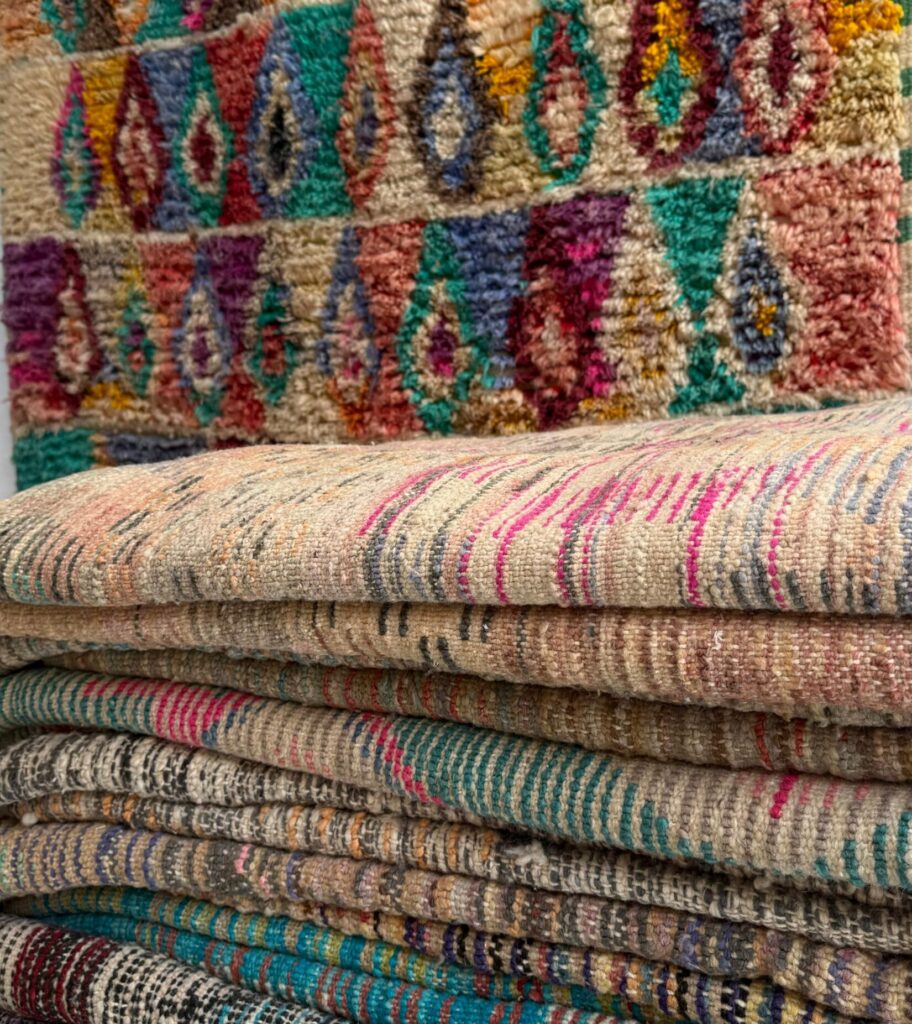
What Is the Average Thickness of a Handmade Moroccan Rug?
Most authentic handmade Moroccan wool rugs range between:
- 0.5 to 1.5 inches (1.3–4 cm) in pile height.
The exact thickness depends on:
- Rug style
- Wool quality
- Weaving technique
- Artisan tradition
- Intended use
Because every rug is handmade, slight variations are completely normal.
Which Moroccan Rug Styles Are the Thickest?
Not all Moroccan rugs feel the same underfoot.
Here’s how the most popular styles compare.
Beni Ourain Rugs
Typical pile height: 1–1.5 inches (2.5–4 cm)
Beni Ourain rugs are famous for their thick, luxurious wool.
Benefits include:
- Extremely soft feel
- Excellent insulation
- Cozy comfort
- Timeless minimalist style
Best for:
- Living rooms
- Bedrooms
- Reading corners
- Nurseries
If you love walking barefoot, a Beni Ourain rug is one of the most comfortable choices available.
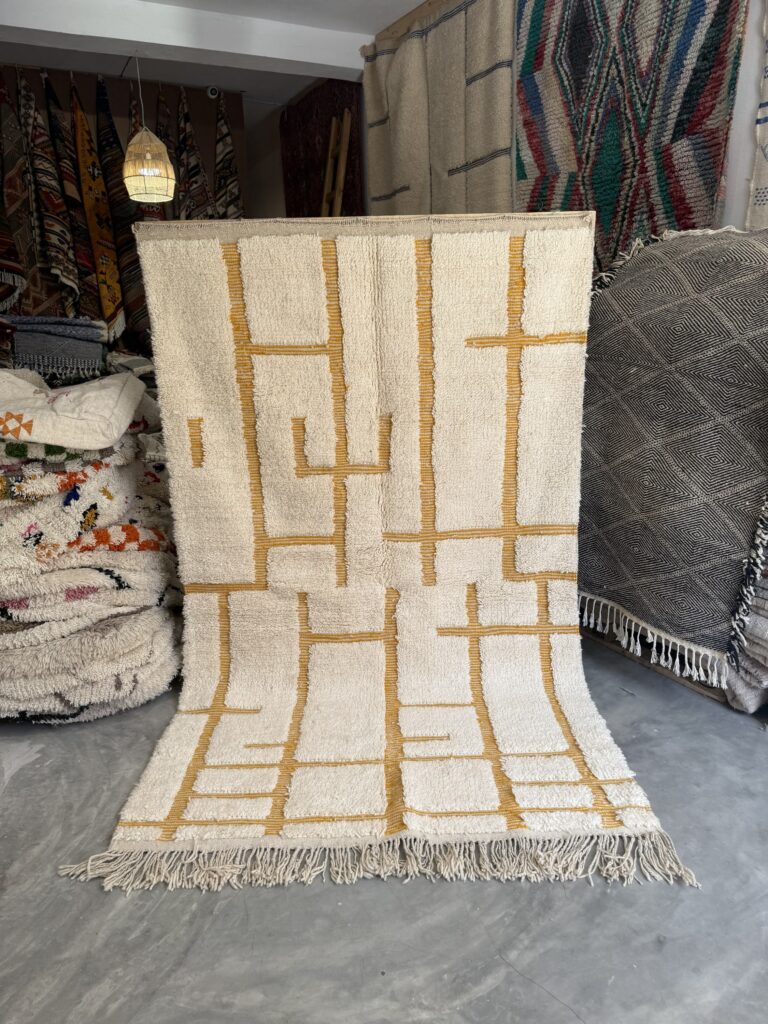
Mrirt Rugs
Typical pile height: 0.8–1.5 inches (2–4 cm)
Mrirt rugs are considered among the finest Moroccan rugs.
They feature:
- Dense premium wool
- Silky-soft texture
- Luxurious comfort
- Elegant modern designs
Ideal for:
- Luxury living rooms
- Master bedrooms
- Boutique-style interiors
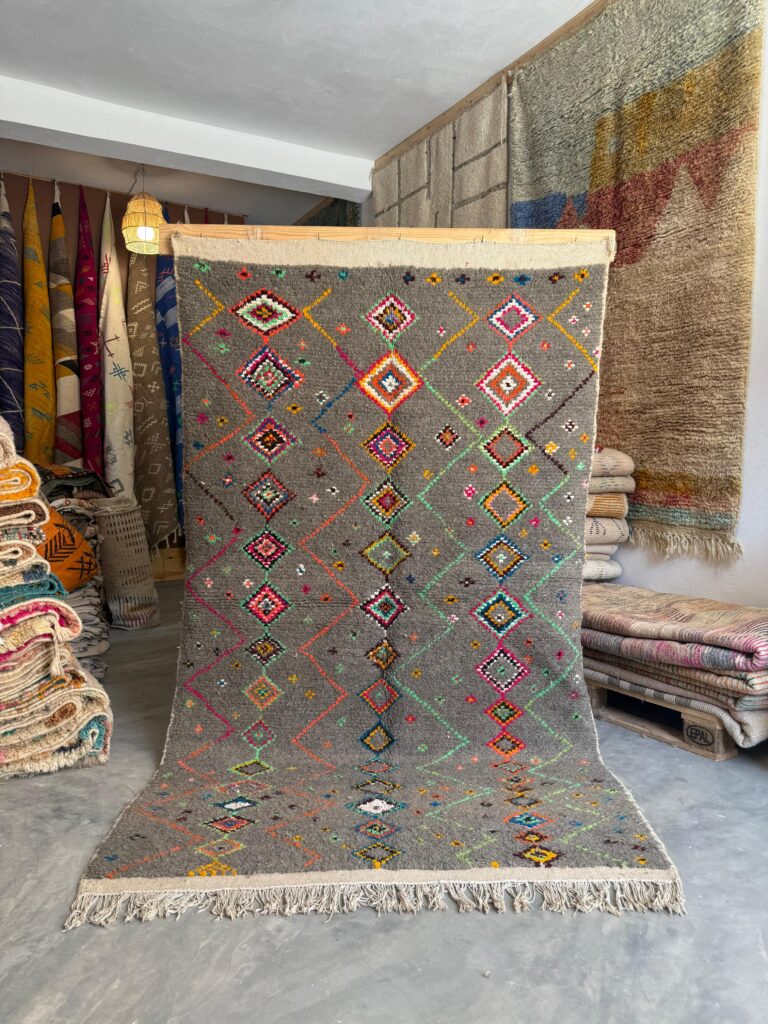
Azilal Rugs
Typical pile height: 0.5–1 inch (1.3–2.5 cm)
Azilal rugs combine softness with colorful artistic designs.
They offer:
- Comfortable texture
- Lightweight feel
- Vibrant patterns
Perfect for:
- Boho homes
- Creative spaces
- Bedrooms
- Living rooms
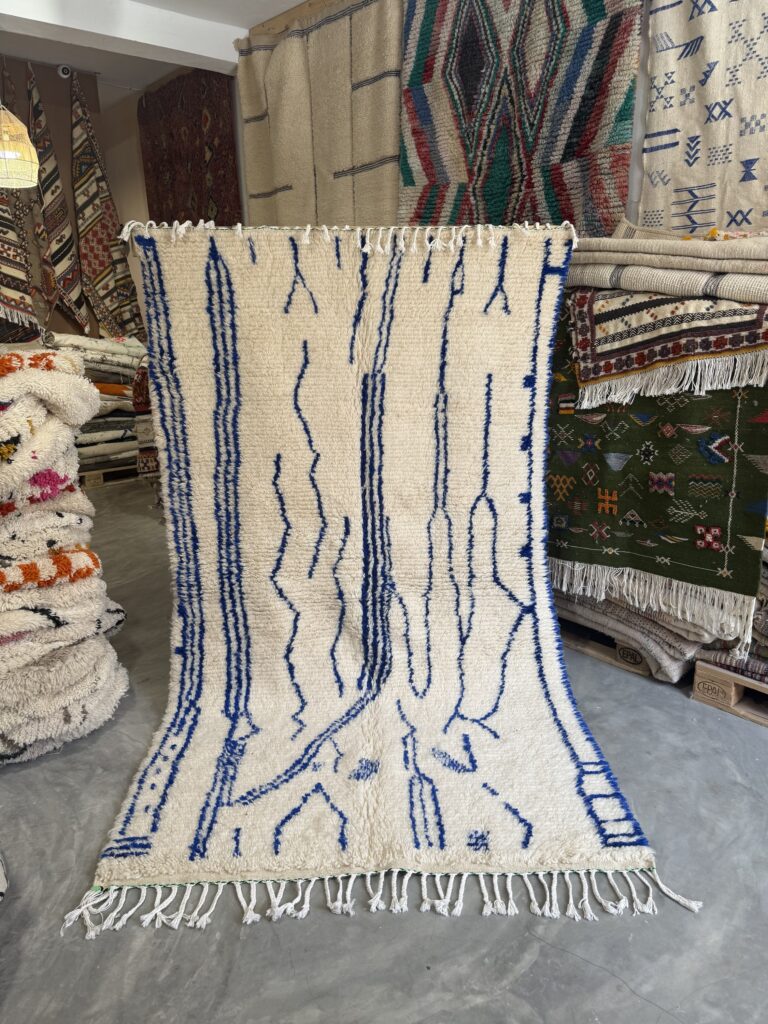
Boujaad Rugs
Typical pile height: 0.4–0.8 inches (1–2 cm)
Vintage Boujaad rugs typically have a slightly lower pile due to age and wear.
Their lower profile offers:
- Easy maintenance
- Soft comfort
- Beautiful vintage character
Excellent for:
- Living rooms
- Dining rooms
- Home offices
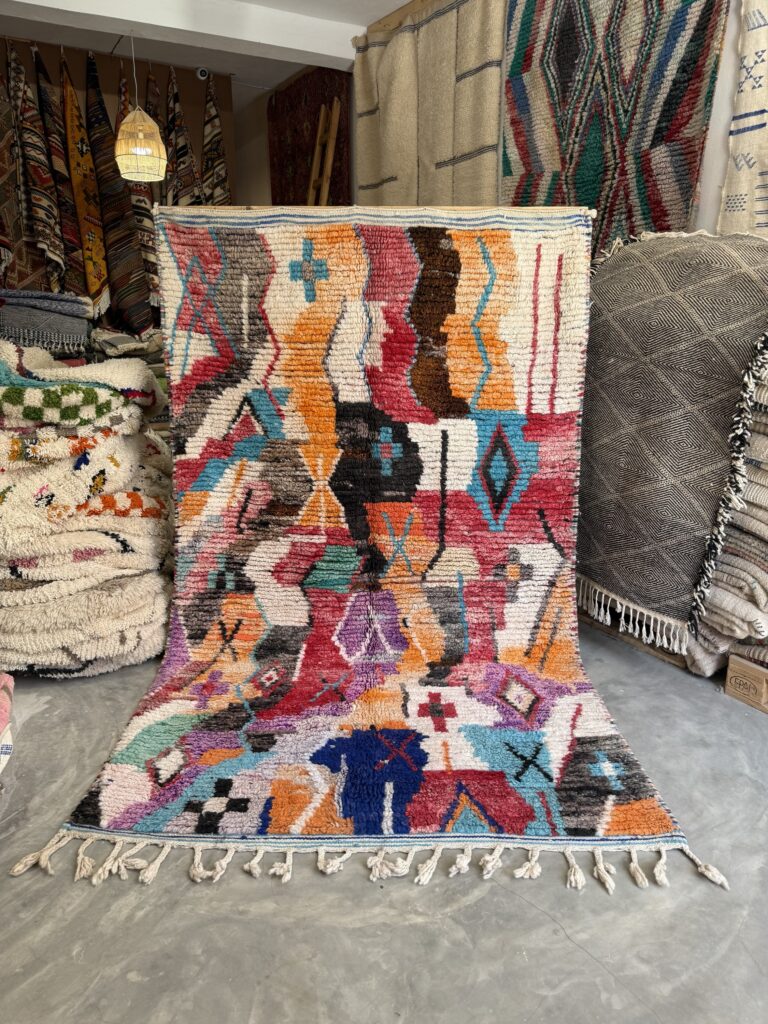
Taznakht Rugs
Typical pile height: 0.3–0.7 inches (0.8–1.8 cm)
Taznakht rugs are tightly woven with intricate patterns.
Advantages include:
- Durable construction
- Detailed designs
- Balanced comfort
Ideal for:
- Dining rooms
- Statement spaces
- Formal living rooms
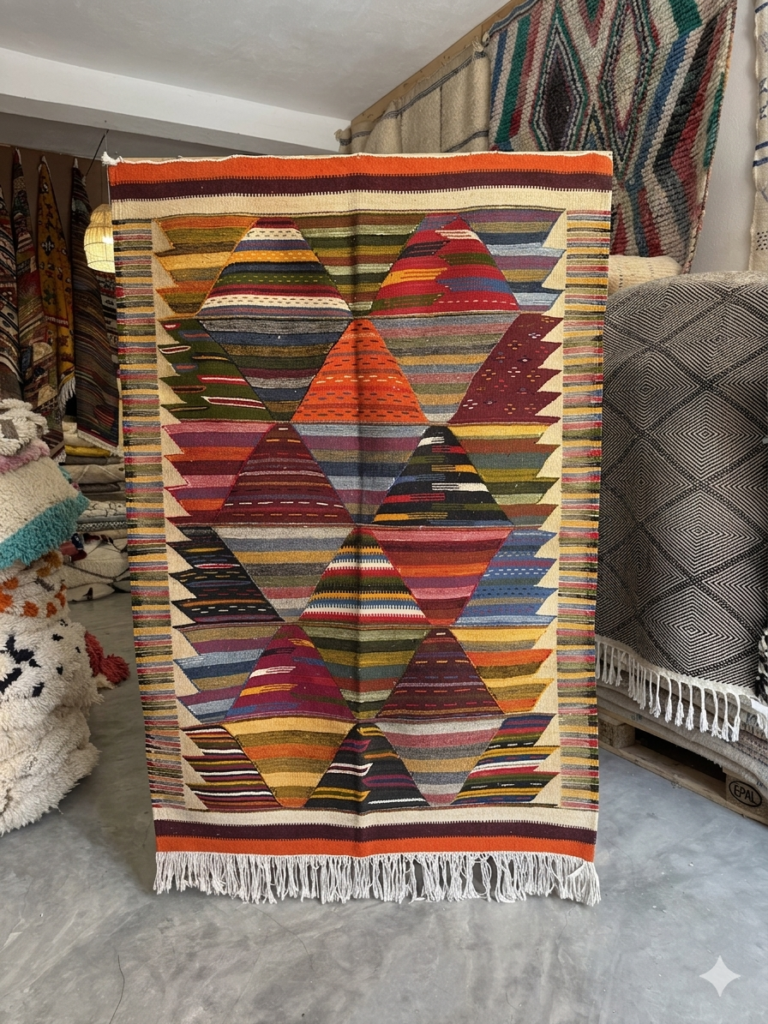
Kilim Rugs
Typical pile height: Flatwoven (no pile)
Unlike knotted wool rugs, Kilim rugs have no raised pile.
Benefits include:
- Lightweight
- Easy to clean
- Highly durable
- Reversible construction
Perfect for:
- Kitchens
- Hallways
- Entryways
- Dining rooms
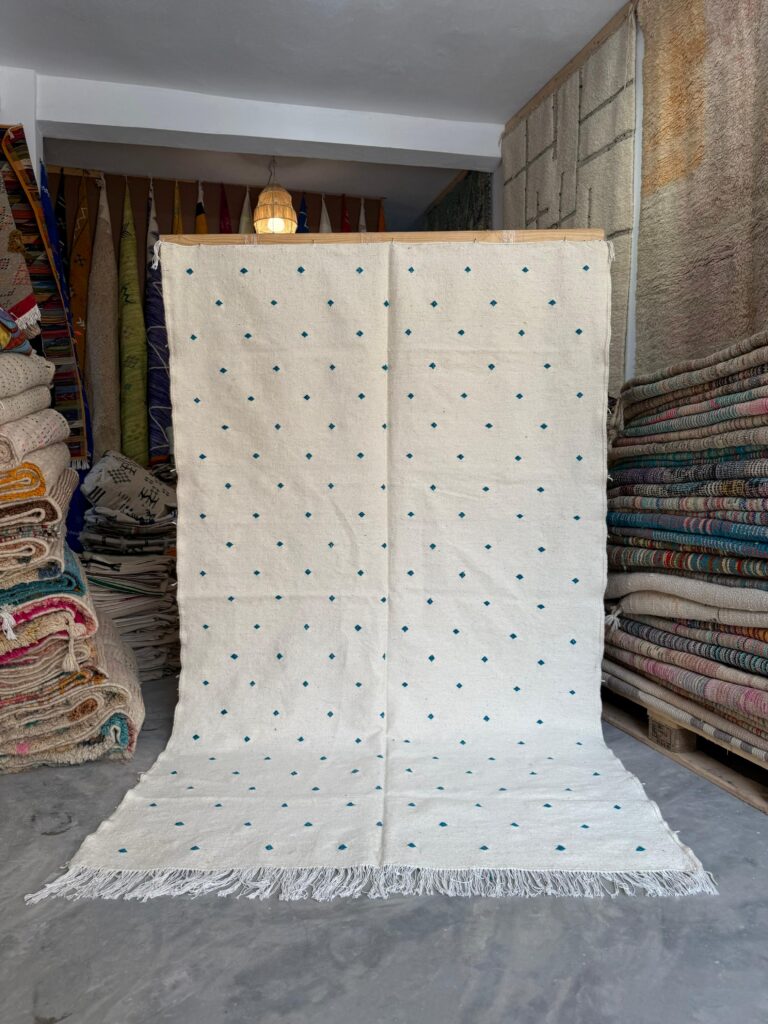
Does a Thicker Rug Mean Better Quality?
Not necessarily.
While thick rugs feel luxurious, quality depends on several factors:
- Wool quality
- Handwoven craftsmanship
- Knot density
- Construction technique
- Finishing details
A well-made medium-pile rug can easily outlast a poorly made thick rug.
Focus on craftsmanship rather than thickness alone.
Best Rug Thickness by Room
Choosing the right pile height depends on how you use the room.
Living Room
Recommended:
- Medium to high pile
Best choices:
- Beni Ourain
- Mrirt
These rugs provide comfort while creating a welcoming atmosphere.
Bedroom
Recommended:
- High pile
A thick wool rug feels wonderfully soft underfoot first thing in the morning.
Dining Room
Recommended:
- Low pile or flatweave
This allows dining chairs to slide easily.
Best options:
- Kilim
- Taznakht
- Boujaad
Hallways
Recommended:
- Low pile
Lower-profile rugs reduce wear and are easier to maintain in busy areas.
Entryway
Recommended:
- Flatwoven or low pile
These rugs handle frequent foot traffic better than thick shaggy rugs.
Home Office
Recommended:
- Medium pile
A balanced pile height offers comfort while allowing office chairs to move more easily.
Do Thick Moroccan Rugs Shed?
Some shedding is normal with authentic handmade wool rugs.
New rugs may release loose fibers during the first few months.
Shedding gradually decreases with regular use and gentle vacuuming.
This is a natural characteristic of premium wool—not a sign of poor quality.
Do Thick Rugs Last Longer?
Longevity depends more on craftsmanship than pile height.
A well-made Moroccan rug can last for decades because of:
- Premium wool
- Traditional weaving techniques
- Strong hand-knotting
- Proper maintenance
Whether thick or flatwoven, an authentic handmade rug is built to stand the test of time.
How Thick Rugs Affect Room Design
Pile height also influences the overall look of a room.
High-Pile Rugs
Create:
- Cozy atmosphere
- Luxurious feel
- Visual softness
Perfect for:
- Bedrooms
- Lounges
- Relaxation spaces
Medium-Pile Rugs
Offer:
- Balance
- Versatility
- Easy maintenance
Suitable for most rooms.
Flatwoven Rugs
Provide:
- Clean appearance
- Practicality
- Minimalist style
Excellent for high-traffic areas.
How to Maintain Thick Moroccan Rugs
To keep your rug looking its best:
- Vacuum regularly using suction only (avoid rotating brush bars when possible).
- Rotate the rug every few months.
- Clean spills immediately by blotting with a clean cloth.
- Shake out dust when practical.
- Have the rug professionally cleaned when needed.
Proper care helps preserve both the pile and the natural wool fibers.
Why Handmade Moroccan Rugs Are Worth the Investment
Authentic Moroccan rugs are handcrafted by skilled Amazigh artisans using premium natural wool and traditional weaving methods.
They offer:
- Outstanding comfort
- Exceptional durability
- Sustainable materials
- Timeless craftsmanship
- Unique, one-of-a-kind beauty
Whether you prefer a plush Beni Ourain rug or a practical Kilim rug, every handmade piece reflects generations of artisan expertise.
Why Choose Women Rugs?
At Women Rugs, we offer an extensive collection of authentic handmade Moroccan rugs crafted by skilled Amazigh artisans using premium natural wool.
Our collection includes luxurious Beni Ourain rugs, exceptionally soft Mrirt rugs, colorful Azilal rugs, vintage Boujaad rugs, elegant Taznakht rugs, and durable Kilim rugs, allowing you to choose the perfect thickness and style for every room in your home.
Every rug is carefully selected for its authenticity, craftsmanship, and lasting quality, ensuring a beautiful investment you’ll enjoy for years to come.
Final Thoughts
So, how thick should a Moroccan rug be?
The answer depends on where you’ll use it. If comfort is your priority, a thick Beni Ourain or Mrirt rug is hard to beat. For busy areas like dining rooms, hallways, and kitchens, lower-pile or flatwoven options such as Kilim or Taznakht rugs are often the better choice.
Instead of focusing on thickness alone, look for authentic craftsmanship, premium natural wool, and a rug style that suits your lifestyle. A well-made handmade Moroccan rug—whether plush or flatwoven—will provide beauty, comfort, and durability for many years.
Frequently Asked Questions
How thick is a typical Moroccan rug?
Most handmade Moroccan rugs have a pile height between 0.5 and 1.5 inches (1.3–4 cm), depending on the weaving style and rug type.
Which Moroccan rug is the thickest?
Beni Ourain and Mrirt rugs are generally the thickest, featuring plush wool piles that provide exceptional softness and warmth.
Are thicker Moroccan rugs better?
Not always. While thicker rugs feel more luxurious, quality depends on the wool, craftsmanship, and weaving technique—not just pile height.
Which Moroccan rug is best for high-traffic areas?
Kilim rugs, Taznakht rugs, and lower-pile Boujaad rugs are excellent choices for busy spaces because they’re durable and easier to maintain.
Do thick Moroccan rugs require special care?
They benefit from regular vacuuming without aggressive brush bars, prompt spot cleaning, periodic rotation, and occasional professional cleaning to keep the wool in excellent condition.