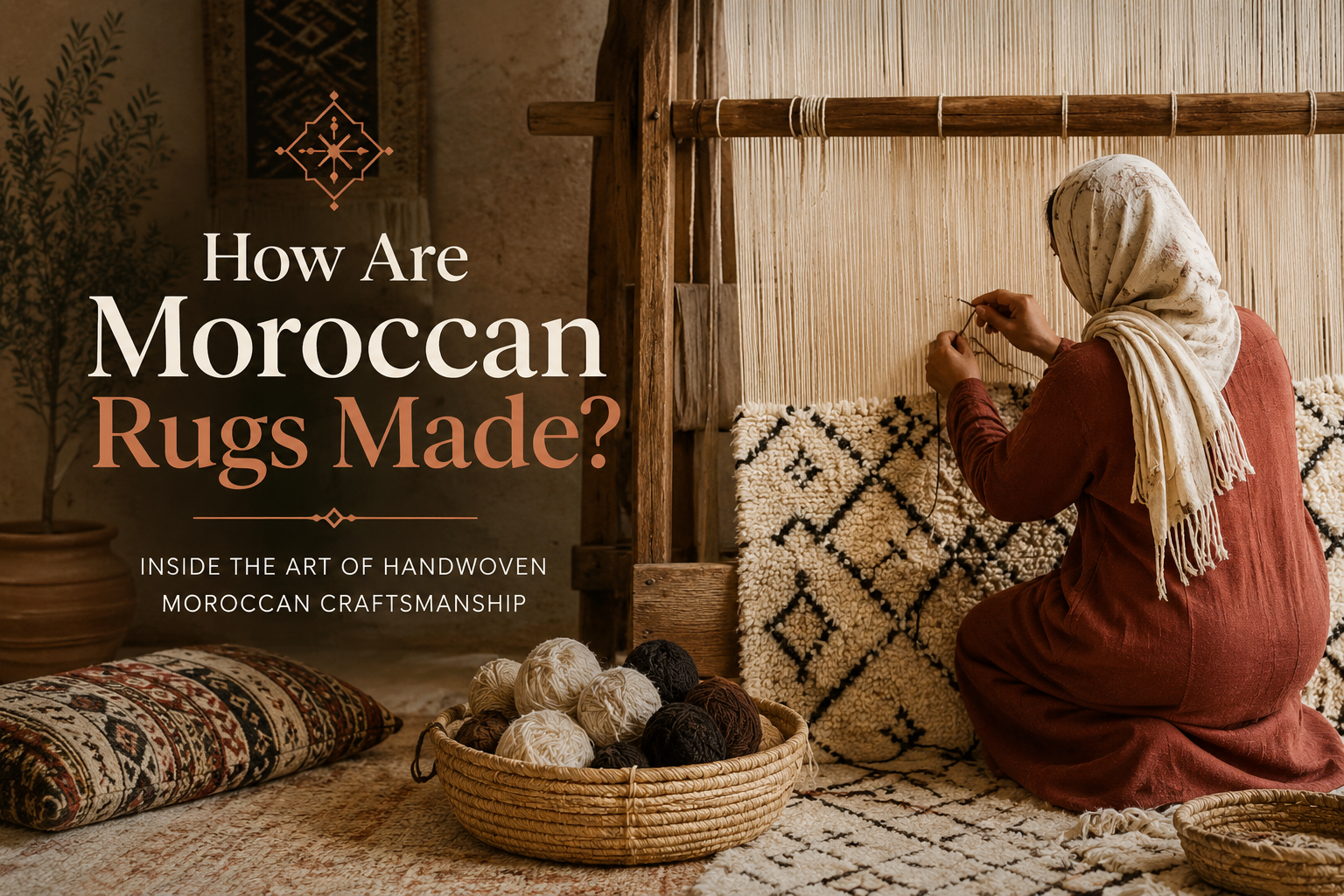
have you ever wondered How Are Moroccan Rugs Made ?
Moroccan rugs are admired around the world for their beauty, durability, and unique character. From minimalist Beni Ourain rugs to colorful Azilal and Boujad designs, these handcrafted pieces have become a staple in modern and traditional interiors alike.
Unlike mass-produced rugs manufactured by machines, authentic handmade Moroccan rugs are created using traditional techniques that have been passed down through generations of skilled artisans. Every rug is the result of countless hours of work, cultural heritage, and artistic expression.
In this guide, we’ll explore the step-by-step process of how Moroccan rugs are made and discover why these handwoven masterpieces are so highly valued around the world.
The History Behind Moroccan Rug Weaving
The tradition of rug weaving in Morocco dates back centuries and is deeply connected to the country’s Berber communities.
For generations, Berber women have woven rugs for practical purposes such as warmth, comfort, and protection from harsh mountain climates. Over time, weaving evolved into a respected art form that reflects family traditions, cultural identity, and regional influences.
Today, many of the same techniques used by ancestors are still practiced by artisans throughout Morocco, making each rug a true representation of heritage and craftsmanship.
Step 1: Sourcing High-Quality Wool
The journey of a handmade Moroccan rug begins with the wool.
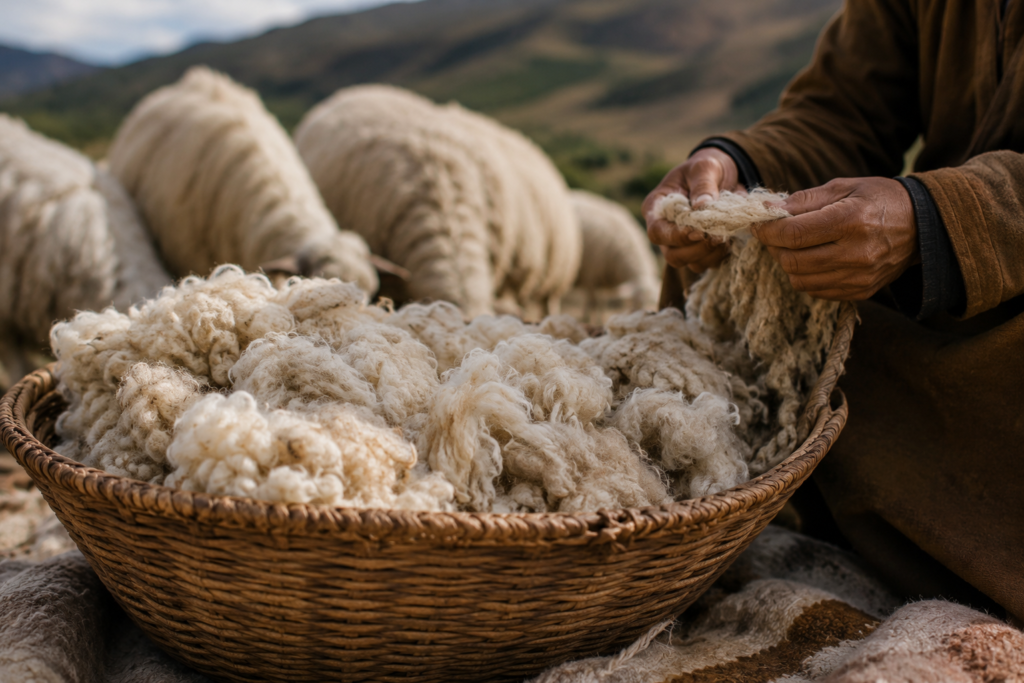
Most authentic Moroccan rugs are crafted from natural wool sourced from sheep raised in Morocco’s Atlas Mountains. This wool is prized for its softness, durability, and insulating qualities.
The quality of the wool plays a significant role in the final rug’s texture, appearance, and longevity.
After shearing, the wool is cleaned thoroughly to remove dirt and natural oils before moving to the next stage of production.
Step 2: Spinning the Wool by Hand
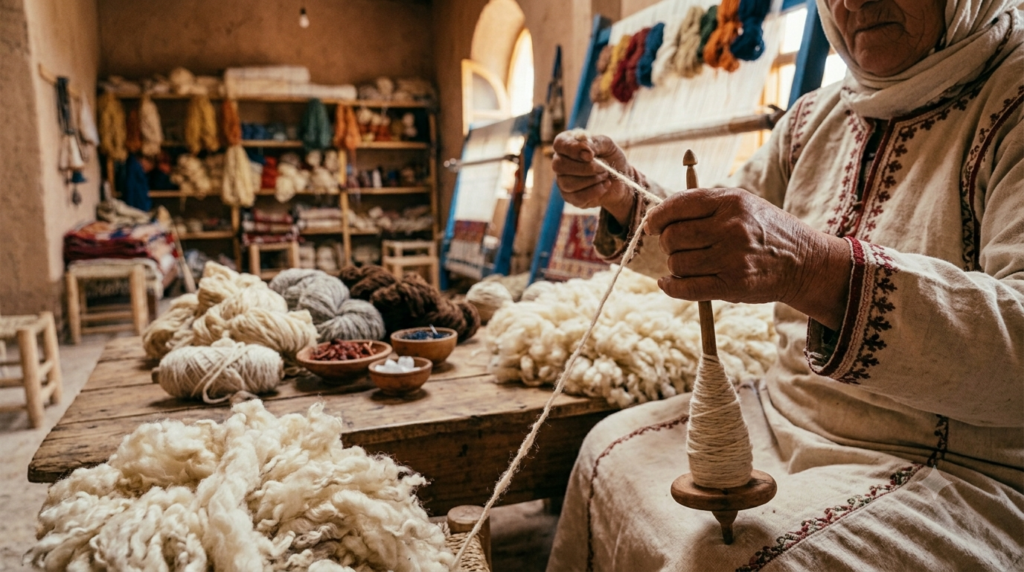
Once the wool has been cleaned and prepared, it is spun into yarn.
Traditionally, artisans spin the wool by hand using simple tools that allow them to create strong and consistent fibers.
This process requires skill and patience, as the thickness and quality of the yarn will influence the rug’s overall appearance and durability.
Hand-spun wool often gives Moroccan rugs their distinctive texture and authentic character.
Step 3: Dyeing the Wool
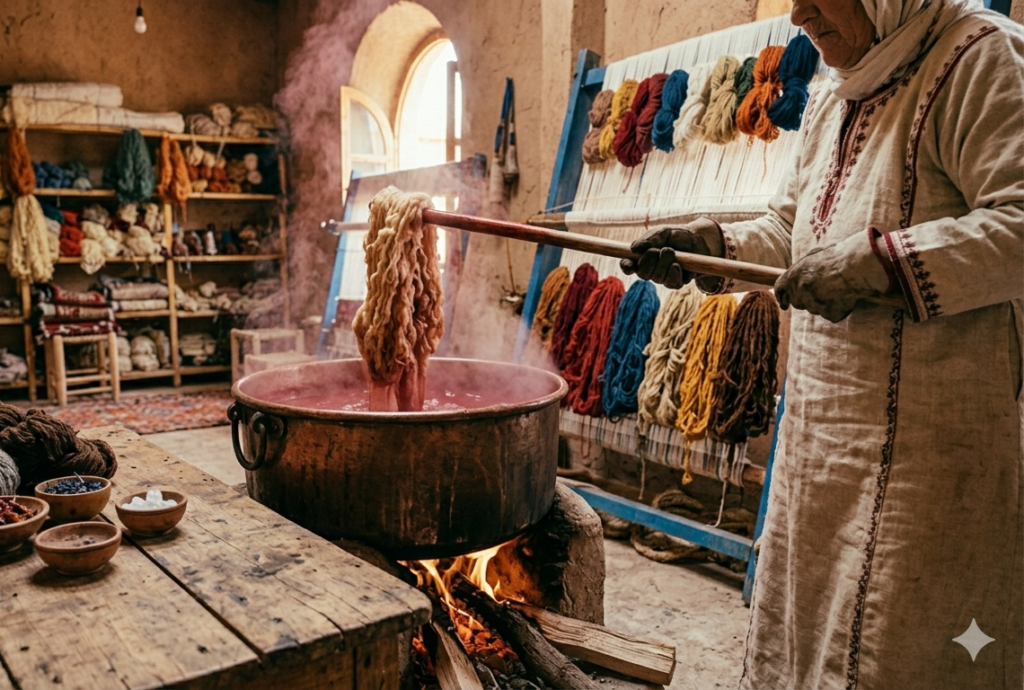
Depending on the style of rug being created, the wool may be dyed before weaving begins.
Many traditional Moroccan rugs use natural dyes made from:
- Plants
- Flowers
- Roots
- Minerals
- Spices
These natural dyes create rich, earthy colors that age beautifully over time.
Some Moroccan rug styles, particularly Beni Ourain rugs, often feature the natural color of wool with minimal dyeing, while others showcase vibrant and colorful designs.
Step 4: Designing the Rug
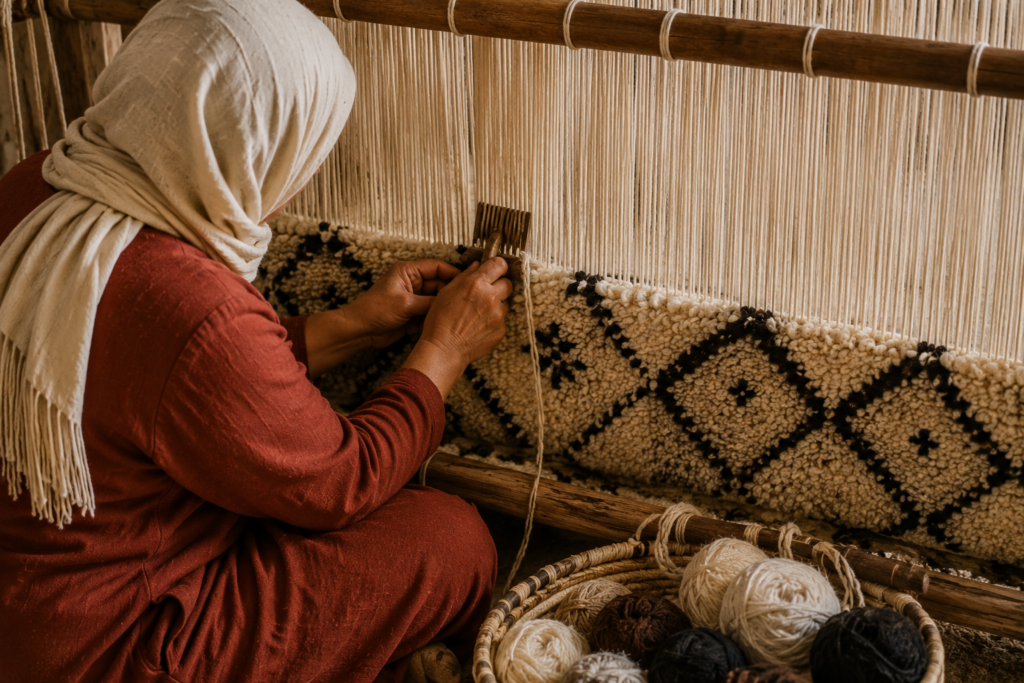
Before weaving starts, artisans determine the rug’s size, pattern, and overall design.
In many cases, traditional Moroccan rug patterns are not drawn on paper beforehand. Instead, experienced weavers create designs from memory, using symbols and motifs that have been passed down through generations.
Common symbols may represent:
- Protection
- Fertility
- Family
- Nature
- Spiritual beliefs
Because many designs are created freehand, no two handmade Moroccan rugs are exactly alike.
Step 5: Preparing the Loom
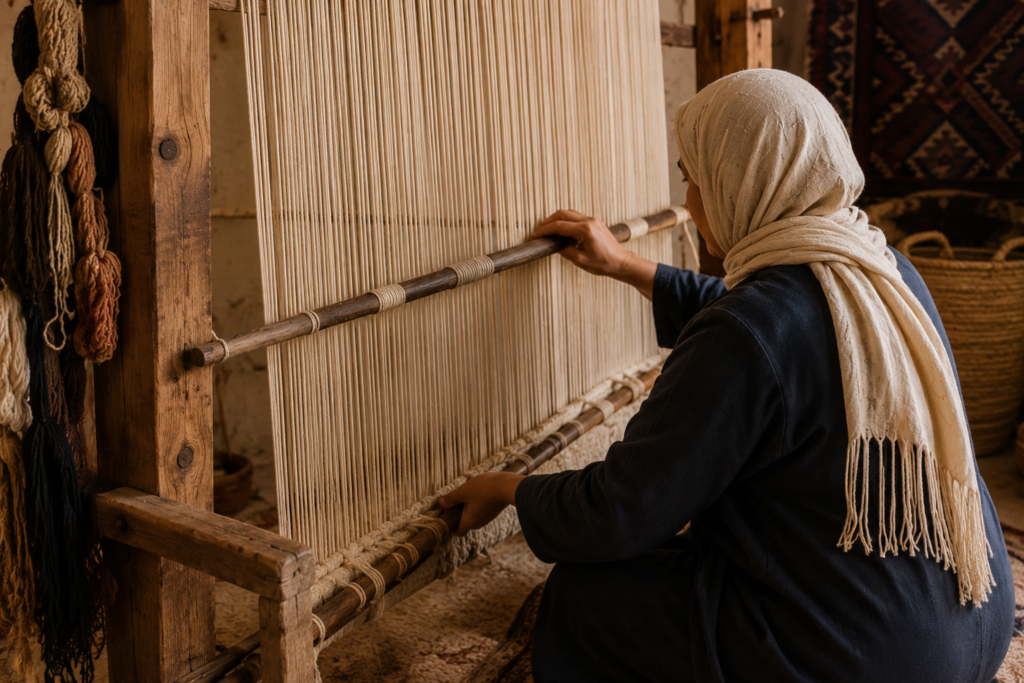
The weaving process takes place on a loom.
A loom is a frame that holds the vertical threads, known as the warp, in place while the rug is woven.
The warp threads form the foundation of the rug and determine its size and structure.
Setting up the loom requires careful planning and precision to ensure the finished rug has the correct dimensions and tension.
Step 6: Hand-Weaving the Rug
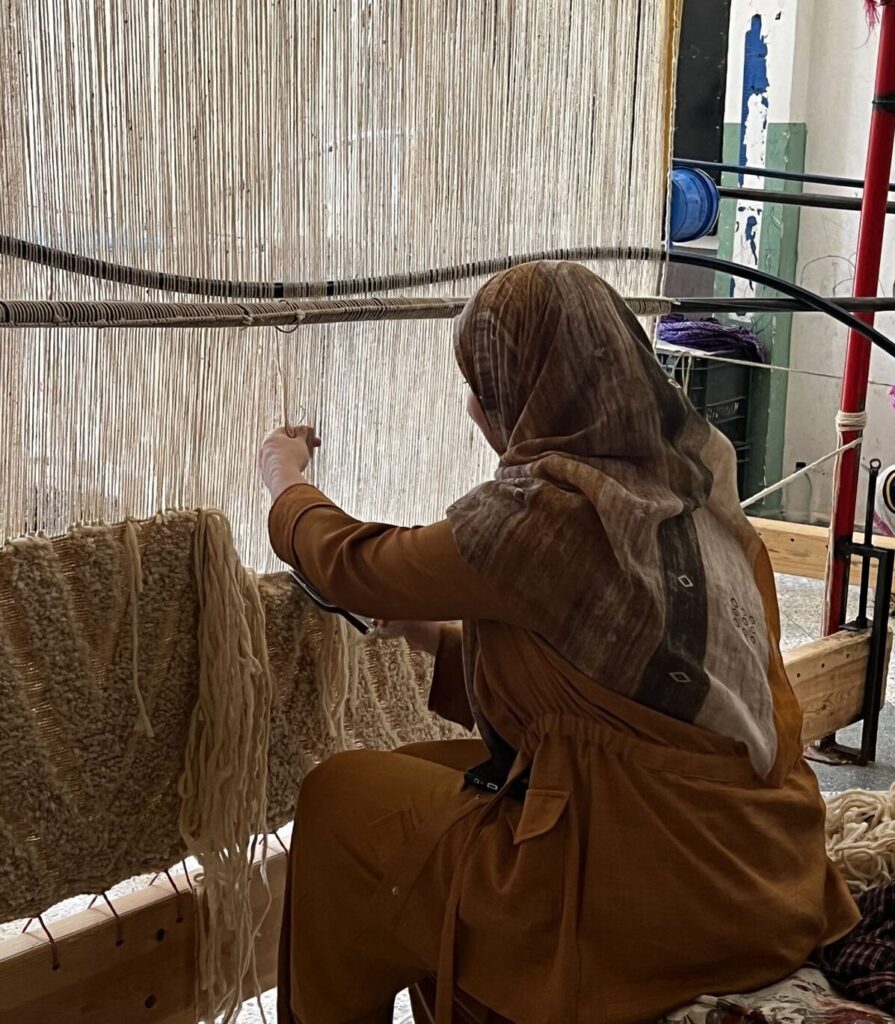
This is the most time-consuming stage of the process.
Using traditional weaving techniques, artisans knot, weave, and secure each section of the rug by hand.
Depending on the style of Moroccan rug, different methods may be used, including:
Hand-Knotting
Individual knots are tied one at a time to create intricate patterns and durable construction.
Flat Weaving
Some Moroccan rugs are woven without a thick pile, resulting in a lighter and flatter texture.
Pile Weaving
Popular styles such as Beni Ourain rugs feature a thick, plush pile created by tying and trimming wool knots.
The weaving process can take anywhere from a few weeks to several months, depending on the rug’s size and complexity.
Step 7: Trimming and Finishing
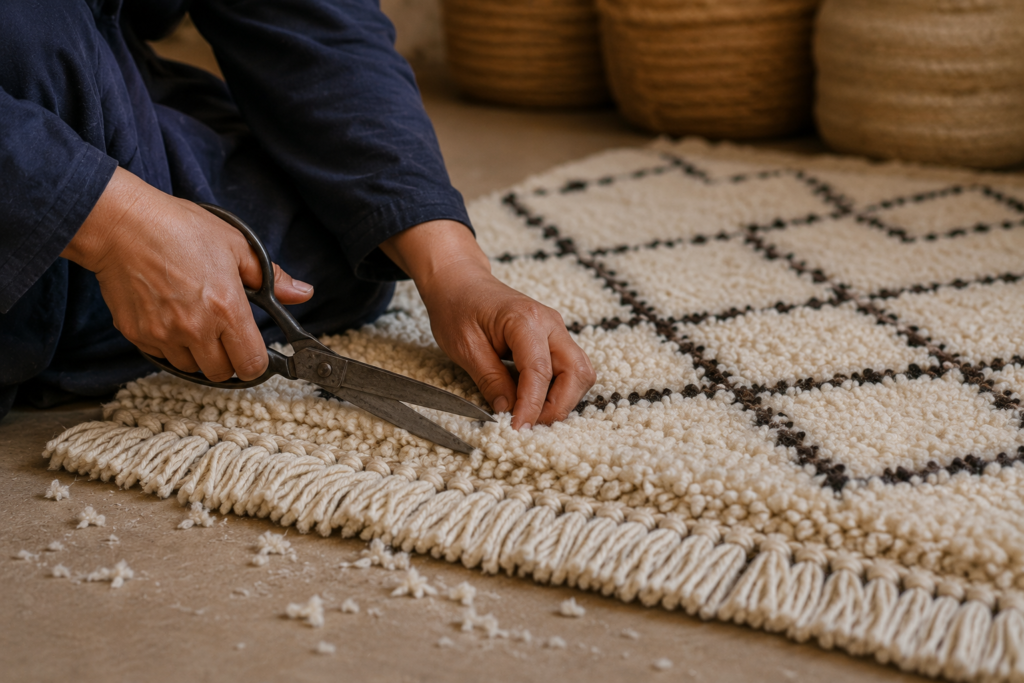
Once the weaving is complete, the rug undergoes a finishing process.
Artisans carefully trim the wool to create an even surface and enhance the appearance of the design.
Additional finishing steps may include:
- Securing loose ends
- Refining edges
- Adjusting fringe details
- Inspecting for quality
These final touches ensure the rug is both beautiful and durable.
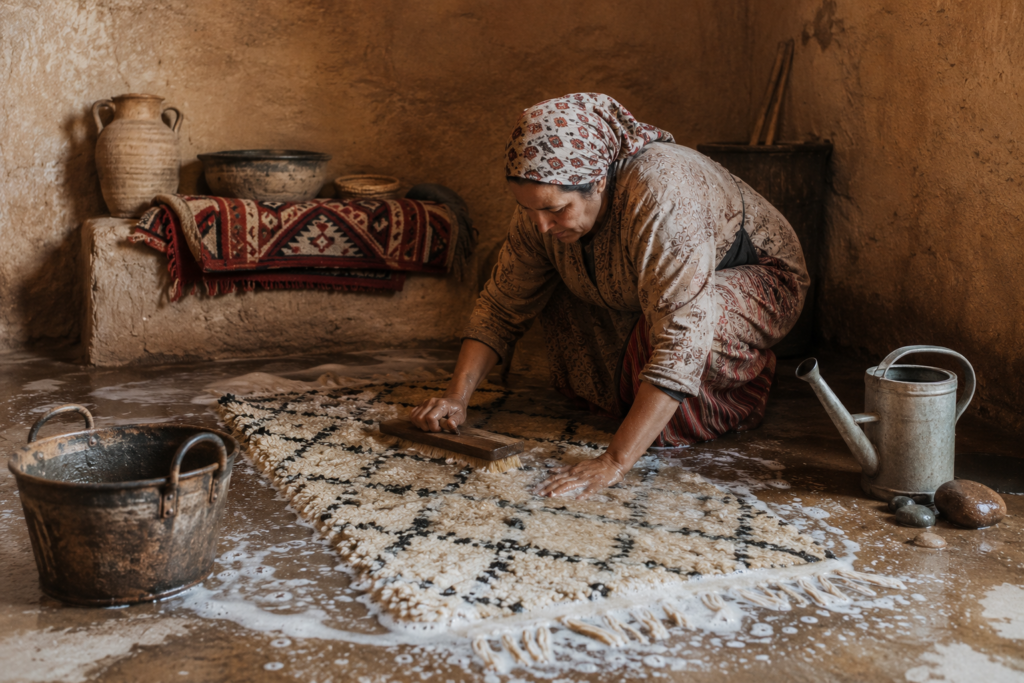
Step 8: Washing the Rug
After finishing, the rug is thoroughly washed.
Washing helps:
- Remove dust and debris
- Soften the wool
- Enhance colors and texture
- Reveal the rug’s final appearance
The rug is then left to dry naturally, often under the Moroccan sun.
This stage helps bring out the richness of the wool and the beauty of the woven patterns.
How Are Moroccan Rugs Made? Moroccan Rug Making Process
Yes, that’s How Are Moroccan Rugs Made
Why Handmade Moroccan Rugs Take So Long to Make
One of the reasons handmade Moroccan rugs are highly valued is the amount of time required to create them.
Depending on factors such as size, design complexity, and weaving technique, a single rug may take:
- Several weeks for smaller designs
- Several months for larger or more intricate pieces
Every stage of production—from preparing the wool to the final wash—is completed with meticulous attention to detail.
This time investment contributes significantly to the quality and value of authentic Moroccan rugs.
What Makes Handmade Moroccan Rugs Special?
Several factors set handmade Moroccan rugs apart from factory-made alternatives:
Unique Designs
No two rugs are exactly alike.
Traditional Craftsmanship
Each rug reflects generations of weaving expertise.
Natural Materials
Authentic rugs are typically made using premium wool and natural dyes.
Exceptional Durability
Handmade Moroccan rugs are designed to last for decades.
Cultural Heritage
Every rug tells a story rooted in Moroccan tradition and artistry.
These qualities make Moroccan rugs more than just home décor—they are functional works of art.
The Importance of Supporting Artisan Craftsmanship
When you purchase a handmade Moroccan rug, you are supporting artisan communities that continue to preserve centuries-old weaving traditions.
This support helps:
- Sustain local craftsmanship
- Promote ethical production
- Preserve cultural heritage
- Empower skilled artisans
Choosing an authentic handmade Moroccan rug is not only an investment in quality but also an investment in tradition and craftsmanship.
Final Thoughts
So, how are Moroccan rugs made?
The process begins with carefully sourced wool and continues through spinning, dyeing, designing, weaving, trimming, washing, and finishing. Every step is completed by skilled artisans using traditional techniques that have been passed down for generations.
The result is a one-of-a-kind rug that combines artistry, durability, and cultural heritage in every fiber.
Whether you’re decorating a modern living room, a cozy bedroom, or an entire home, a handmade Moroccan rug offers a level of craftsmanship and character that simply cannot be replicated by machines.
Frequently Asked Questions
What materials are used to make Moroccan rugs?
Most authentic Moroccan rugs are made from natural wool, cotton, and natural dyes.
How long does it take to make a Moroccan rug?
Depending on the size and complexity, a handmade Moroccan rug can take anywhere from several weeks to several months to complete.
Are Moroccan rugs handmade?
Yes. Authentic Moroccan rugs are traditionally handwoven by skilled artisans using techniques passed down through generations.
Why are Moroccan rugs unique?
Each handmade Moroccan rug is individually woven and often features one-of-a-kind patterns, symbols, and variations.
Do Moroccan rugs use natural dyes?
Many traditional Moroccan rugs are colored using natural dyes derived from plants, minerals, flowers, and spices.
Table of Contents
How Are Moroccan Rugs Made? This is one of the most common questions asked by people who admire the beauty and authenticity of handmade Moroccan textiles. How Are Moroccan Rugs Made begins with sourcing high-quality wool, often gathered from sheep raised in the Atlas Mountains. Next, artisans prepare the fibers and set up traditional looms for weaving. How Are Moroccan Rugs Made also involves skilled hand-knotting and weaving techniques passed down through generations of Berber women. As the design takes shape, every symbol and pattern tells a story. How Are Moroccan Rugs Made reflects patience, as each rug can take weeks or even months to complete. During the process, artisans carefully adjust the tension and texture to ensure durability. How Are Moroccan Rugs Made includes trimming the pile by hand to create a smooth and balanced finish. After weaving, the rug is thoroughly washed and dried under the Moroccan sun. How Are Moroccan Rugs Made showcases the craftsmanship, heritage, and artistic traditions of Morocco. For those seeking authentic handmade decor, understanding How Are Moroccan Rugs Made helps reveal the true value behind every piece. Ultimately, How Are Moroccan Rugs Made is a story of culture, skill, and timeless craftsmanship that continues to inspire people around the world.How Are Moroccan Rugs Made