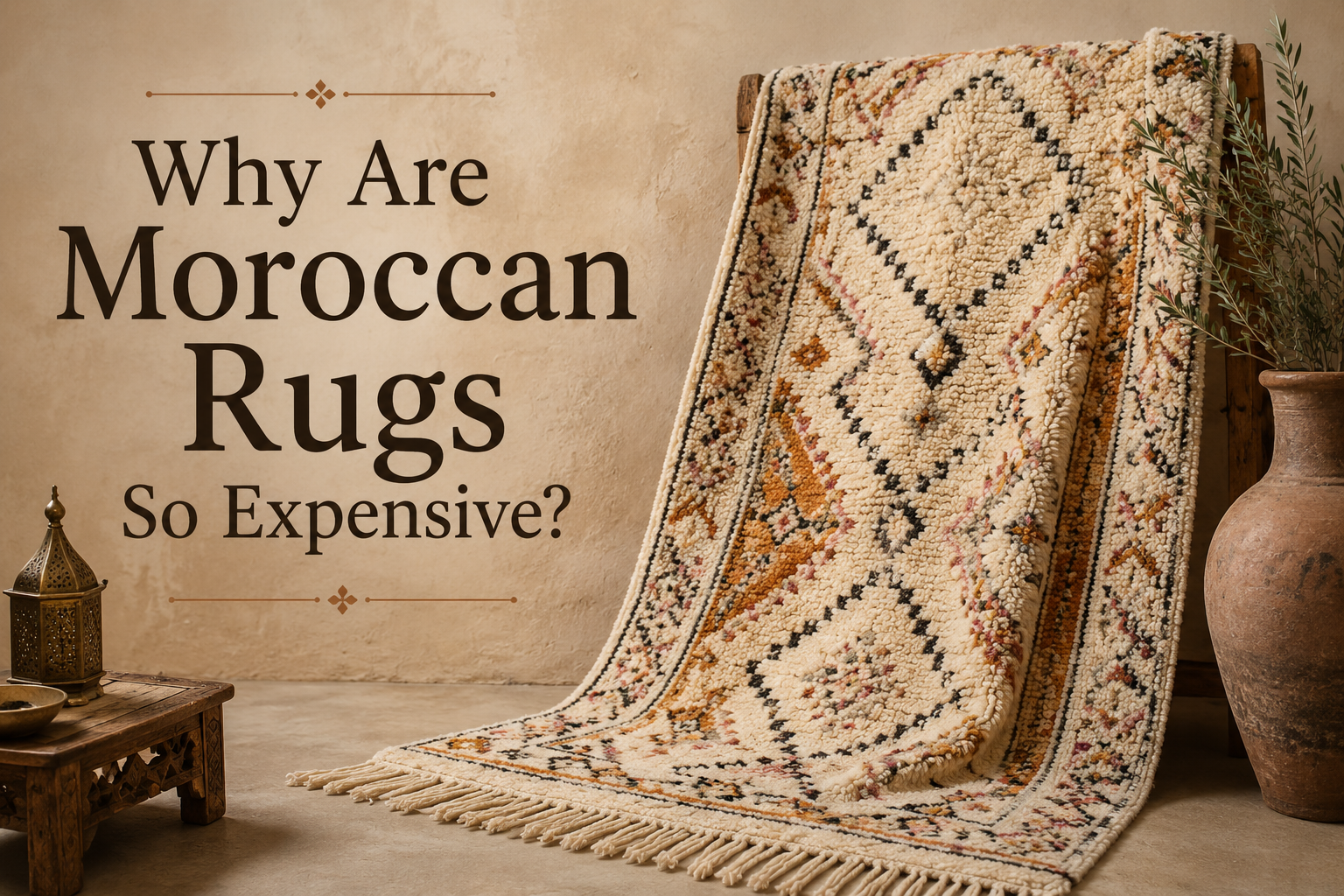
Moroccan rugs have become one of the most sought-after home décor pieces in the world. From luxury interior designers to homeowners looking to elevate their spaces, handmade Moroccan rugs are everywhere. But one question continues to come up:
Why are Moroccan rugs so expensive?
At first glance, the price of an authentic Moroccan rug may seem surprisingly high compared to mass-produced rugs sold in big-box stores. However, once you understand the craftsmanship, materials, history, and labor behind each piece, the value becomes clear.
Unlike factory-made rugs, handmade Moroccan rugs are woven using centuries-old techniques passed down through generations of Berber artisans in Morocco. Every rug tells a story, takes weeks or even months to create, and is designed to last for decades.
In this guide, we’ll break down exactly why Moroccan rugs command premium prices — and why they are considered worthwhile investments for your home.
The Handmade Process Takes Weeks or Even Months
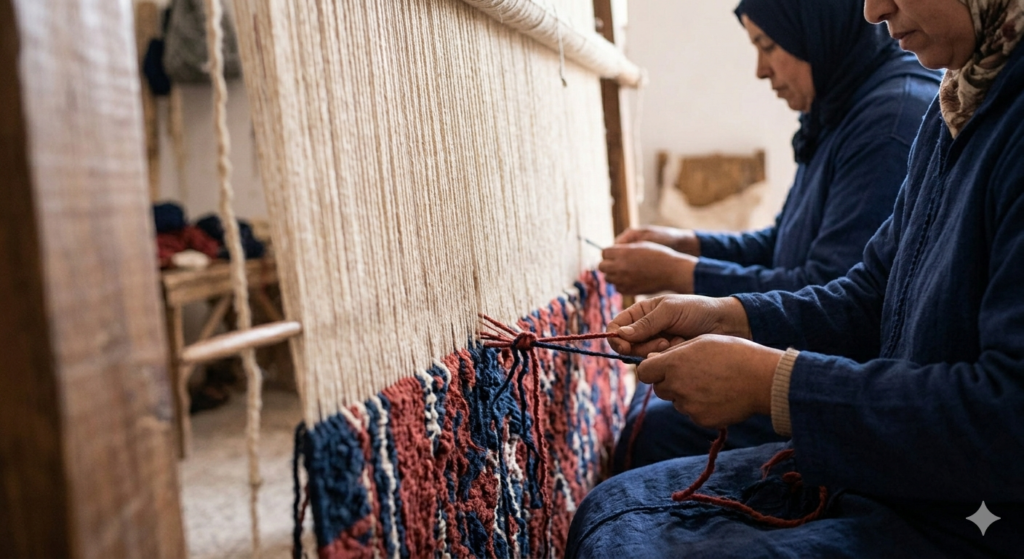
One of the biggest reasons Moroccan Carpets are expensive is the amount of time and craftsmanship involved in making them.
Authentic handmade Moroccan Carpets are not produced in factories or assembled by machines. Instead, they are woven entirely by hand using traditional wooden looms by skilled artisans, many of whom learned the craft from their families.
Every knot is tied individually by hand. Depending on the size, detail, and complexity of the design, a single rug can take:
- Several weeks
- Multiple months
- Sometimes even longer for intricate custom pieces
This slow, detailed process requires extraordinary patience and expertise.
Unlike machine-made rugs that can be produced in large quantities within hours, handmade Moroccan Carpets are created one piece at a time. That level of human craftsmanship naturally increases their value and price.
Premium Natural Materials Increase the Cost
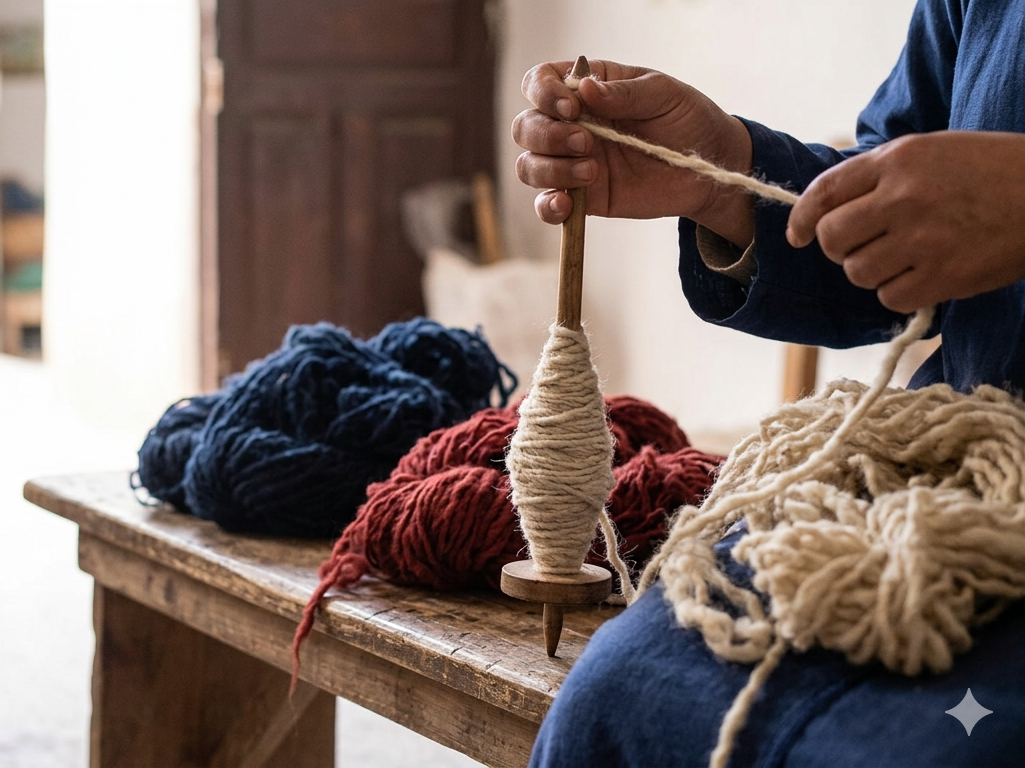
Another major reason handmade Moroccan rugs are expensive is the use of high-quality natural materials.
Traditional Moroccan Carpets are commonly made from premium wool sourced from sheep raised in the Atlas Mountains. This wool is prized for its:
- Soft texture
- Durability
- Warmth
- Natural resilience
The wool is often hand-spun, which helps preserve its rich texture and authenticity.
Many authentic Moroccan Carpets also use natural dyes derived from:
- Plants
- Herbs
- Minerals
- Flowers
- Saffron
- Henna
These natural materials create rich, organic color variations that cannot be perfectly replicated by synthetic factory dyes.
While synthetic rugs may cost less initially, they often wear out quickly. Handmade Moroccan carpets, on the other hand, can last for decades when properly cared for.
Each Moroccan Rug Is Completely Unique
No two handmade Moroccan Carpets are exactly alike.
That uniqueness is one of the reasons collectors, designers, and homeowners are willing to pay premium prices for them.
Each rug reflects the personal creativity and cultural identity of the artisan who made it. Traditional Berber symbols, geometric patterns, and tribal motifs often carry meanings connected to:
- Family
- Fertility
- Nature
- Protection
- Spiritual beliefs
- Daily life
Because every rug is handmade, slight imperfections and asymmetry actually add to its beauty and authenticity.
Machine-made rugs are designed for consistency. Handmade Moroccan rugs are valued because they are one-of-a-kind works of art.
Moroccan Rugs Carry Deep Cultural and Historical Value
Authentic Moroccan rugs are far more than decorative accessories. They are part of Morocco’s cultural heritage.
For centuries, Berber tribes across Morocco have woven rugs for practical and symbolic purposes. Different regions developed distinct styles that are now recognized worldwide.
Some of the most popular styles include:
Beni Ourain Rugs
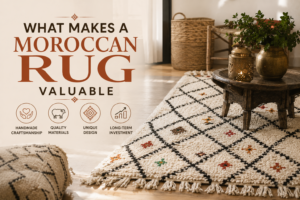
Known for their soft wool, minimalist cream backgrounds, and black geometric lines.
Azilal Rugs
Colorful artistic rugs featuring abstract patterns and vibrant tones.
Boujad Rugs
Vintage-inspired rugs recognized for warm colors and expressive tribal motifs.
Kilim Rugs
Flatwoven rugs with lightweight structures and bold geometric designs.
These weaving traditions have been passed down through generations, preserving techniques that are hundreds of years old.
When you purchase an authentic handmade Moroccan rug, you are not simply buying décor — you are investing in living history and artisan craftsmanship.
Ethical Craftsmanship and Fair Artisan Labor
The growing demand for ethical and sustainable shopping has also contributed to the higher value of handmade Moroccan Carpets.
Unlike mass-produced rugs made in industrial factories, authentic Moroccan rugs support artisan communities and traditional craftsmanship.
Handmade rug production provides income for skilled weavers who dedicate significant time and expertise to their craft. Fair compensation for this labor is an important part of the rug’s final price.
Consumers today increasingly value products that are:
- Sustainably made
- Ethically sourced
- Artisan-crafted
- Environmentally conscious
Investing in handmade Moroccan rugs supports slower, more meaningful production methods that prioritize quality over mass production.
Moroccan Rugs Are Built to Last for Decades
One reason many homeowners consider Moroccan rugs worth the price is their incredible durability.
A well-made handmade Moroccan rug can last for generations with proper care.
The dense wool fibers naturally resist wear while maintaining softness and texture over time. In many cases, vintage Moroccan rugs become even more beautiful as they age.
Compared to cheaper synthetic rugs that may need replacing every few years, authentic Moroccan rugs offer long-term value.
When viewed as a long-term investment instead of a short-term purchase, the pricing becomes much more understandable.
Why Cheap Moroccan Rugs Are Often Not Authentic
Many shoppers are surprised to find “Moroccan-style rugs” sold online at very low prices. In most cases, these are not authentic handmade Moroccan rugs.
Cheap imitations are often:
- Machine-made
- Manufactured with synthetic fibers
- Printed instead of woven
- Produced in factories outside Morocco
While these rugs may mimic Moroccan designs, they lack the craftsmanship, durability, and authenticity of genuine artisan-made rugs.
Here are a few signs of authentic handmade Moroccan rugs:
- Slight irregularities in patterns
- Natural wool texture
- Hand-knotted or handwoven construction
- Unique designs
- Rich artisan detail
- High-quality craftsmanship
Authentic rugs require time, labor, and premium materials — which is why genuine pieces cost more.
How to Choose the Right Handmade Moroccan Rug
When shopping for Moroccan rugs, focusing only on price can be misleading. Instead, consider overall quality and authenticity.
Here are a few important factors to evaluate:
Material Quality
Choose rugs made from natural wool rather than synthetic fibers.
Craftsmanship
Hand-knotted and handwoven rugs offer superior durability and uniqueness.
Style
Select styles that complement your interior design aesthetic.
Size
Ensure the rug fits your room layout properly.
Authenticity
Purchase from trusted sellers specializing in authentic handmade Moroccan rugs.
At Women Rugs, every rug is carefully selected for its craftsmanship, authenticity, and timeless beauty.
Why Interior Designers Love Moroccan Rugs
Moroccan rugs continue to dominate interior design trends because they blend effortlessly with many décor styles, including:
- Minimalist interiors
- Scandinavian design
- Bohemian spaces
- Contemporary homes
- Modern luxury décor
- Organic modern aesthetics
Their neutral palettes, organic textures, and artistic patterns create warmth and character in nearly any room.
Designers especially value handmade Moroccan rugs because they add depth, texture, and authenticity to interiors that often feel overly polished or mass-produced.
Are Moroccan Rugs Worth the Price?
For many homeowners, the answer is yes.
Authentic handmade Moroccan rugs combine:
- Artisan craftsmanship
- Premium natural materials
- Cultural heritage
- Timeless design
- Long-lasting durability
- One-of-a-kind artistry
Unlike disposable décor trends, Moroccan rugs are investment pieces that can remain beautiful and functional for decades.
Their higher price reflects the incredible amount of labor, skill, tradition, and authenticity behind every piece.
Final Thoughts
So, why are Moroccan rugs so expensive?
Because they are handmade works of art created through generations of tradition, skilled craftsmanship, premium materials, and cultural heritage.
Every authentic Moroccan rug carries a story, a history, and a level of artistry that simply cannot be replicated by machines.
While cheaper alternatives exist, they rarely offer the same beauty, durability, or authenticity as genuine handmade Moroccan rugs.
If you’re looking for a timeless piece that adds warmth, character, and lasting value to your home, investing in an authentic Moroccan rug is absolutely worth it.
At Women Rugs, we believe every handmade Moroccan rug deserves to be appreciated not only as décor, but as a meaningful expression of craftsmanship and tradition.